





QR Code

Products
Contact Us


Fax
+86-579-87223657

Email

Address
Wangda Road, Ziyang Street, Wuyi County, Jinhua City, Zhejiang Province, China



As semiconductor devices continue to evolve toward higher power, higher frequency, and greater integration, the requirements placed on epitaxial growth equipment have become increasingly demanding. Whether producing SiC power devices, GaN RF components, LED chips, or silicon epitaxial wafers, manufacturers rely on one critical component inside the reactor—the SiC-coated graphite susceptor.
Although rarely visible outside the reaction chamber, this component directly affects wafer temperature uniformity, particle generation, coating lifetime, and ultimately device yield.
What Is a SiC-Coated Graphite Susceptor?
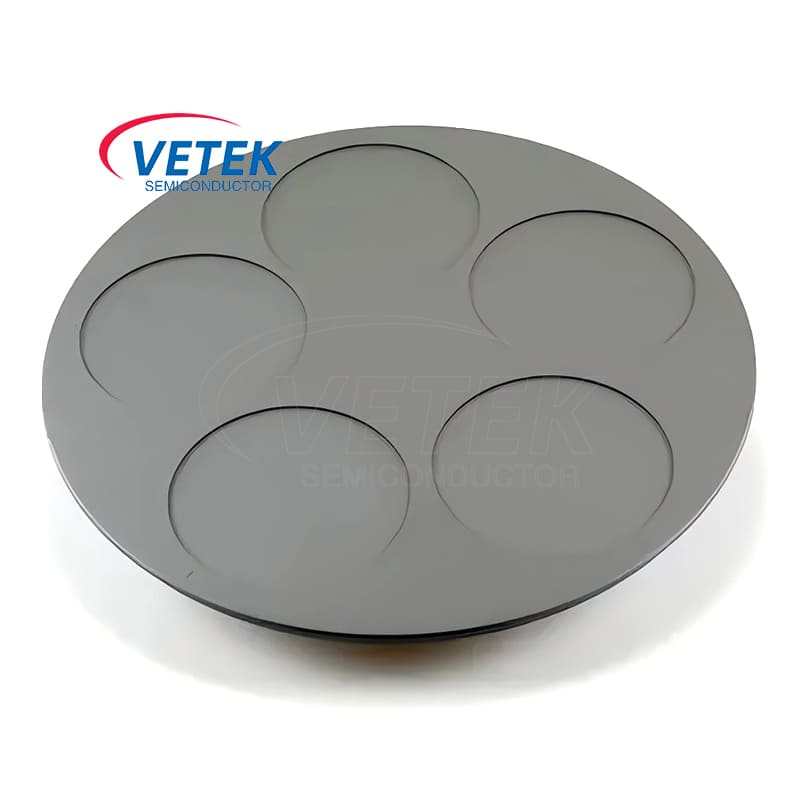
A SiC-coated graphite susceptor is a precision-engineered graphite component protected by a dense Chemical Vapor Deposition (CVD) silicon carbide coating.
Inside an epitaxial reactor, the susceptor performs several critical functions:
Depending on the process, susceptors may be designed as pancake susceptors, barrel susceptors, trays, wafer carriers, or customized reactor components.
Why Not Use Bare Graphite?
Graphite has long been recognized as one of the best high-temperature engineering materials because of its:
· Excellent thermal conductivity
· Low thermal expansion coefficient
· High temperature stability
· Easy machinability
· Low density
However, bare graphite is unsuitable for direct semiconductor processing.
During epitaxy, process gases such as H₂, HCl, NH₃, silane, chlorosilanes, and metal-organic precursors continuously attack exposed graphite surfaces. Over time, the graphite begins to oxidize, corrode, and release carbon particles.
These particles can:
· contaminate wafers,
· increase defect density,
· reduce epitaxial uniformity,
· shorten reactor maintenance intervals.
Therefore, almost all modern semiconductor reactors use protective ceramic coatings instead of exposed graphite.
Why Silicon Carbide Is the Preferred Coating?
Among available coating materials—including BN, ZrB₂, TaC, and various oxide coatings—CVD silicon carbide has become the industry standard because it offers an excellent balance of thermal, chemical, and mechanical properties.
Key advantages include:
Why Chemical Vapor Deposition (CVD)?
Various coating technologies exist, including:
· Plasma spraying
· Sol-gel coating
· Electrophoretic deposition
· Pack cementation
· Brush coating
However, semiconductor manufacturing overwhelmingly favors Chemical Vapor Deposition (CVD) because it produces coatings with:
· extremely high purity,
· excellent density,
· uniform thickness,
· superior adhesion,
· low porosity,
· excellent conformality on complex geometries.
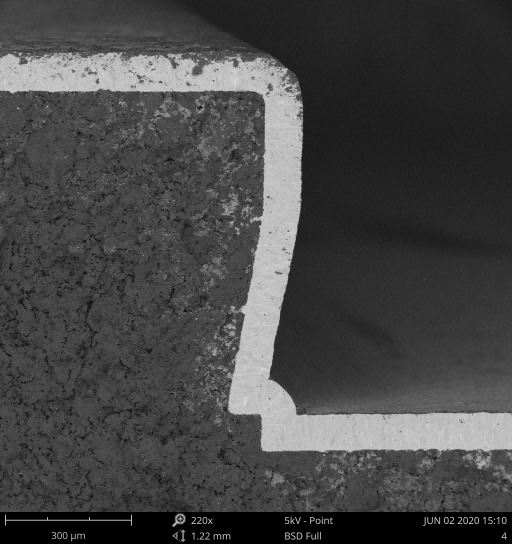
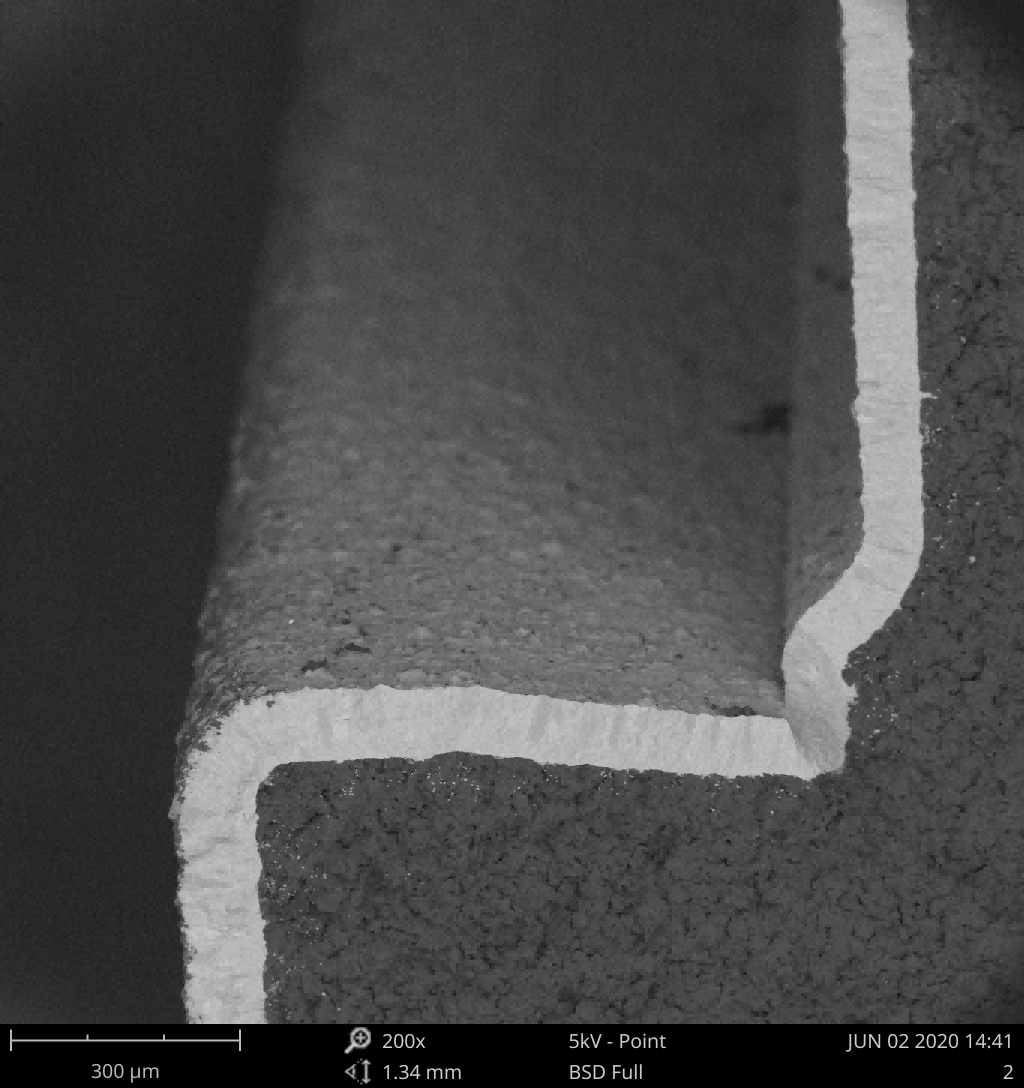
Unlike sprayed coatings that often contain pores and weak interfaces, CVD SiC forms a dense crystalline layer chemically bonded to the graphite substrate, resulting in significantly longer service life under harsh process conditions.
Typical Applications
SiC-coated graphite components are widely used in:
SiC Epitaxy:Supporting conductive and semi-insulating SiC wafers during homoepitaxial growth for MOSFETs, SBDs, and other power devices.
Silicon Epitaxy:Providing stable thermal platforms for silicon wafer epitaxy used in CMOS and power semiconductor manufacturing.
GaN Epitaxy:Supporting GaN-on-Si and GaN-on-SiC growth for RF devices, HEMTs, MicroLEDs, and power electronics.
LED Manufacturing:Used inside MOCVD reactors for blue, green, UV, and MicroLED epitaxial growth.
Conclusion
As semiconductor processes continue moving toward larger wafers, tighter process windows, and lower defect densities, the importance of high-performance reactor components continues to grow.
CVD SiC-coated graphite susceptors have become indispensable because they combine graphite's superior thermal performance with silicon carbide's outstanding chemical resistance, purity, and durability.
Whether for SiC power devices, GaN RF electronics, LED production, or silicon epitaxy, investing in high-quality SiC-coated graphite components directly contributes to higher yield, longer equipment uptime, and lower manufacturing costs.
+86-579-87223657
Wangda Road, Ziyang Street, Wuyi County, Jinhua City, Zhejiang Province, China