





QR Code

Products
Contact Us


Fax
+86-579-87223657

Email

Address
Wangda Road, Ziyang Street, Wuyi County, Jinhua City, Zhejiang Province, China



Article Summary: The Porous Tantalum Carbide (TaC) Coated Graphite Ring is a specialized thermal-field component designed for Physical Vapor Transport (PVT) SiC single-crystal growth. By combining high-purity porous graphite with a dense CVD tantalum carbide coating, it provides high-temperature stability, corrosion protection, controlled heat distribution, and low contamination. This article explains its structure, technical advantages, applications, specifications, and selection considerations for semiconductor and SiC crystal-growth equipment.
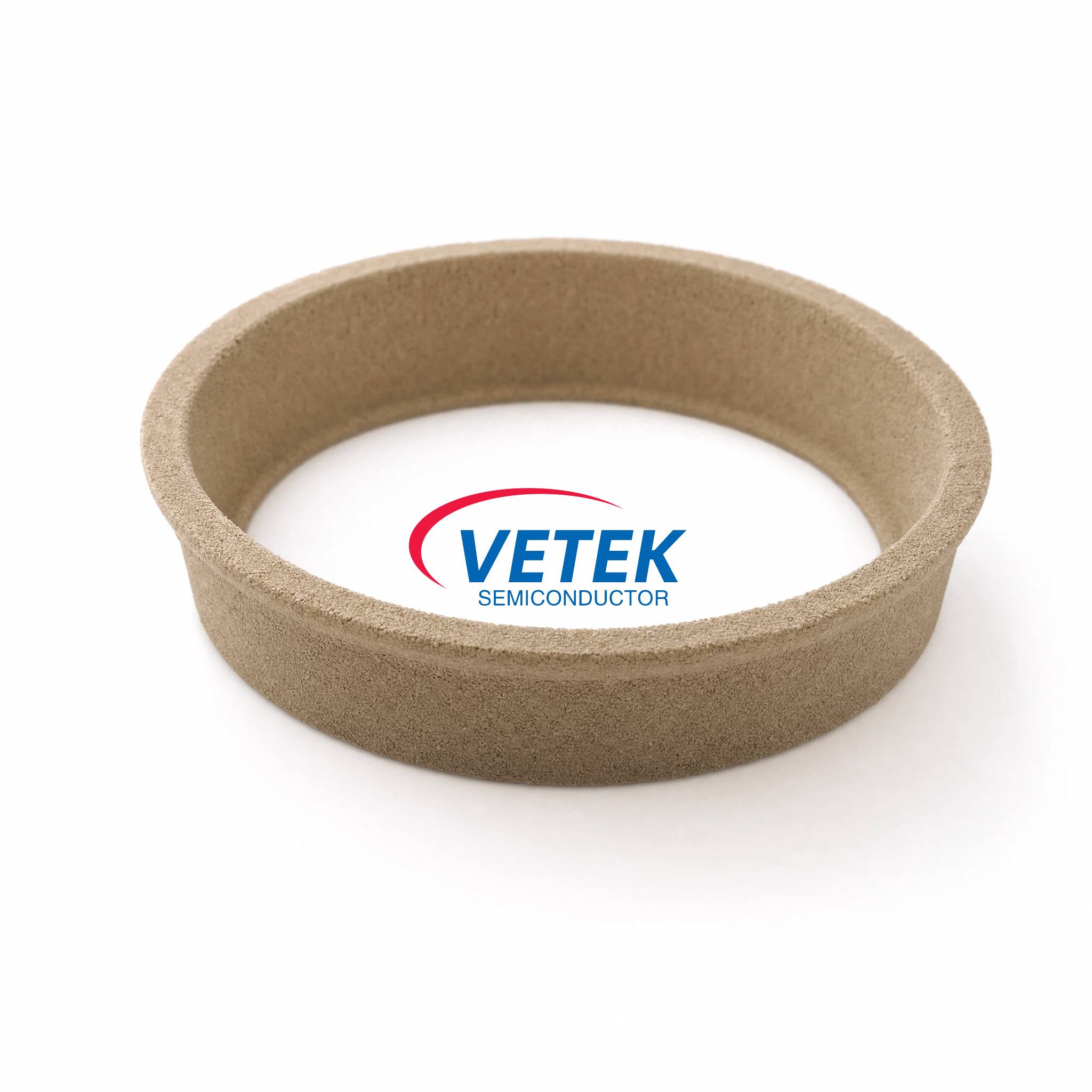
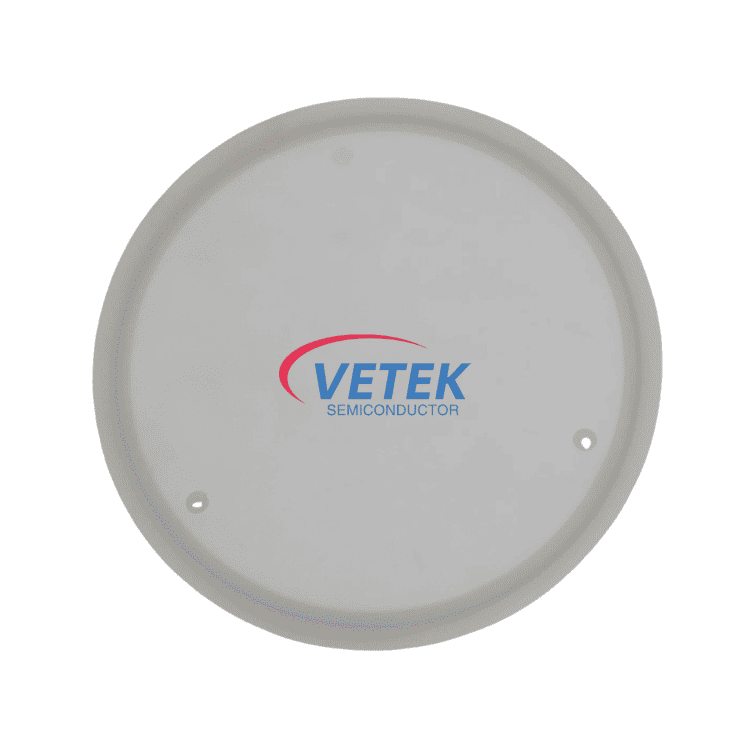
A Porous Tantalum Carbide (TaC) Coated Graphite Ring is an engineered thermal-field component used primarily in SiC single-crystal growth furnaces operating with the PVT process. According to VETEK, the component combines a high-purity porous graphite substrate with a tantalum carbide coating deposited through Chemical Vapor Deposition (CVD). This combination is designed to withstand demanding thermal and chemical conditions while supporting stable crystal-growth environments.
The porous graphite substrate provides a lightweight structural base and contributes to heat distribution and vapor transport within the furnace. Meanwhile, the TaC layer acts as a protective barrier against silicon vapor, carbon-bearing gases, and other corrosive species encountered during SiC crystal growth.
This material architecture is particularly valuable because the thermal field inside a PVT furnace directly influences the quality, consistency, and reproducibility of SiC crystals. A properly engineered ring can therefore become more than a mechanical component—it can contribute to overall process stability.
SiC crystal growth requires extremely high temperatures and a chemically aggressive process environment. Conventional graphite can provide useful thermal characteristics, but its surface may be exposed to reactive species during prolonged operation. A high-quality TaC coating helps address this challenge by creating a dense, chemically resistant protective layer.
The VETEK product is specified for operation at temperatures of up to 2200°C, while its TaC coating is designed to maintain structural integrity in demanding high-temperature environments. The coating also protects the graphite substrate from silicon vapor attack and corrosive process gases.
For SiC manufacturers, the practical benefits can include:
In other words, TaC coating is not simply a surface treatment. When correctly engineered and deposited, it becomes an important part of the component's functional performance.
High-temperature stability is one of the most important requirements for PVT SiC crystal-growth equipment. The VETEK Porous TaC Coated Graphite Ring is designed for temperatures up to 2200°C, making it suitable for demanding thermal-field applications.
The dense CVD TaC coating separates the graphite substrate from aggressive process species. This protective function is particularly important when the component is repeatedly exposed to silicon vapor and carbon-containing gases.
Porous graphite can contribute to heat distribution and vapor transport within the hot zone. This makes the substrate structure relevant to process design rather than merely serving as mechanical support.
Crystal quality is highly sensitive to unwanted impurities. High-purity raw materials combined with a dense protective TaC coating can help limit impurity release and particle shedding, supporting cleaner process conditions.
The CVD process creates a strong bond between the TaC coating and graphite substrate. Good adhesion is essential because repeated thermal cycling can otherwise increase the risk of coating defects or premature component failure.
Different SiC crystal-growth furnaces may require different ring dimensions, structural configurations, and coating parameters. VETEK states that dimensions, structural details, and coating specifications can be customized according to furnace requirements and customer needs.
For engineers and purchasing teams, technical specifications are essential when evaluating a Porous Tantalum Carbide (TaC) Coated Graphite Ring. The following parameters are based on VETEK's published product information. Actual specifications may be customized according to equipment and process requirements.
| Parameter | Specification | Engineering Significance |
|---|---|---|
| Base Material | High-purity porous graphite | Provides lightweight structure and thermal-field functionality |
| Coating Material | Tantalum Carbide (TaC) | Protects the graphite from high-temperature chemical attack |
| Temperature Resistance | Up to 2200°C | Supports demanding SiC crystal-growth environments |
| Coating Thickness | 20–100 μm, customizable | Can be adjusted for specific application requirements |
| Density | 2.6–2.8 g/cm³ | Reflects the lightweight porous graphite substrate design |
| Thermal Conductivity | 110 W/m·K | Supports heat transfer within the thermal-field system |
| Main Application | SiC crystal growth and high-temperature equipment | Targets semiconductor and advanced thermal-field applications |
When comparing suppliers, buyers should evaluate the complete material system rather than looking only at coating thickness. Substrate purity, pore structure, coating uniformity, adhesion, dimensional accuracy, and inspection procedures can all affect component performance.
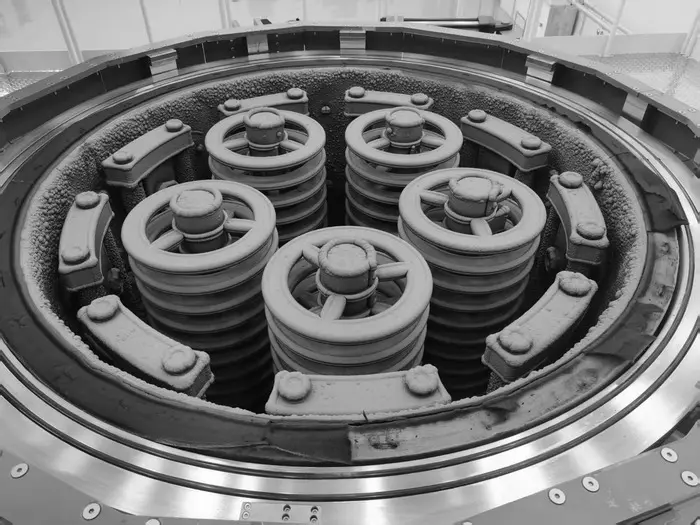
The primary application is SiC single-crystal growth using the PVT method. This process is widely associated with the production of SiC substrates for next-generation semiconductor applications. VETEK identifies several application areas for this component.
The component is particularly valuable where process repeatability matters. Stable thermal conditions and reduced contamination can help manufacturers maintain consistent operating conditions across production cycles.
Choosing a suitable ring requires more than matching an outer diameter. Procurement engineers should consider the entire operating environment and the compatibility between the component and the furnace.
For buyers looking for a China manufacturer or supplier, technical communication should take place before placing an order. Sharing furnace drawings, component dimensions, operating temperatures, and process requirements can significantly improve product matching.
VETEK provides customized options covering dimensions, substrate configurations, and coating parameters, making it possible to adapt the ring to different SiC growth furnace requirements.
It is primarily used as a thermal-field component in PVT SiC single-crystal growth furnaces. Its porous graphite substrate supports thermal distribution and vapor transport, while the TaC coating provides protection against high-temperature chemical attack.
TaC offers high-temperature stability and strong chemical resistance. It helps protect the graphite substrate from silicon vapor and other reactive species, contributing to a cleaner and more stable growth environment.
VETEK specifies a coating thickness range of 20–100 μm, with customization available according to application requirements.
Yes. VETEK states that customization can cover dimensions, structural details, substrate configuration, and coating parameters based on customer drawings, furnace designs, and process requirements.
The published technical specification lists a temperature resistance of up to 2200°C. Actual operating suitability should be evaluated according to the furnace design, thermal profile, atmosphere, and process conditions.
A Porous Tantalum Carbide (TaC) Coated Graphite Ring combines the thermal-field characteristics of high-purity porous graphite with the high-temperature and chemical resistance of a CVD TaC coating. For PVT SiC crystal growth, this material architecture can support thermal stability, corrosion protection, contamination control, and repeatable process conditions. With customizable dimensions and coating parameters, it can also be adapted to different crystal-growth furnace designs.
If you are sourcing a high-performance Porous Tantalum Carbide (TaC) Coated Graphite Ring for SiC crystal-growth equipment, VETEK can provide customized solutions based on your drawings and process requirements. Contact us today to discuss your specifications, coating requirements, furnace compatibility, and sourcing needs, and let our technical team help you identify a suitable TaC-coated graphite solution.
+86-579-87223657
Wangda Road, Ziyang Street, Wuyi County, Jinhua City, Zhejiang Province, China