





QR Code

Products
Contact Us


Fax
+86-579-87223657

E-mail

Address
Wangda Road, Ziyang Street, Wuyi County, Jinhua City, Zhejiang Province, China



In PECVD production, many coating and deposition problems do not start with plasma power or gas chemistry. They start with the carrier that holds the wafers. A well-made graphite boat for PECVD supports thermal balance, stable wafer positioning, cleaner process conditions, and more repeatable film growth. This article explains why the right graphite boat matters, what pain points buyers usually face, how to compare material and coating choices, and what to look for before placing an order. It also introduces how WuYi TianYao New Material Tech.Co.,Ltd. approaches practical application requirements for demanding process environments.
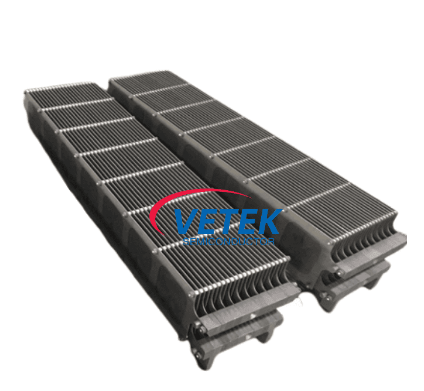
A graphite boat for PECVD is not just a passive holder for wafers. It is one of the quiet components that can influence the entire deposition rhythm. In a PECVD chamber, film quality depends on a sensitive balance of temperature distribution, wafer spacing, gas exposure, plasma interaction, and mechanical stability. If the carrier disturbs that balance, the process may still run, but the output stops being predictable.
Buyers sometimes focus heavily on reactor configuration, gas system design, or chamber cleaning cycles, and that makes sense. Those are major cost centers. But the boat that carries the wafers sits right in the middle of the process window. If its geometry shifts, if its surface sheds particles, if it reacts poorly to repeated heating and cooling, or if it fails to keep wafers positioned consistently, the process starts drifting in ways that are expensive and difficult to diagnose.
In real production, consistency is everything. A strong graphite boat for PECVD helps maintain repeatability from batch to batch. It supports even loading, reduces avoidable contamination risk, and gives the line a better chance of delivering stable film thickness and uniform electrical performance.
The answer is simple: a graphite boat usually looks less “technical” than the equipment around it. It does not have the visual impact of a power supply, a vacuum system, or an automation module. So it is easy to treat it as a commodity part. That is exactly where trouble starts.
The cost of choosing the wrong boat rarely appears on the quotation itself. It shows up later as scrap, rework, unstable recipes, longer maintenance windows, or more frequent replacement cycles. It may also show up in the engineering team’s time. When a line spends days tracing a uniformity issue that turns out to be linked to carrier distortion or surface degradation, the “cheap” component stops being cheap very quickly.
Another reason buyers underestimate this part is that not every supplier explains it well. Some only list dimensions and bulk density. That information matters, but it does not answer the questions that process engineers actually care about: How stable is the structure under repeated thermal cycling? How well does the material resist chemical attack in the specific gas environment? How tightly are critical tolerances controlled? Can the supplier adapt the design if the chamber geometry or wafer count changes?
A serious purchasing decision should look beyond a simple material label and ask how the graphite boat will behave after weeks and months in the real chamber.
The wrong graphite boat for PECVD can create problems that seem unrelated at first glance. Teams may see lower yield, film thickness variation, unexplained contamination, or shorter maintenance intervals without immediately linking those outcomes back to the carrier.
What makes these problems frustrating is that they often appear gradually. The first few runs may seem acceptable. Then the line begins to drift. A few operators notice a trend. Engineers start tightening inspection standards. Over time, the process becomes harder to manage. That is why buyers should think in terms of durability under repeated use, not only initial appearance or laboratory-level numbers.
| Common Buyer Pain Point | What Usually Happens in Production | What to Check in the Graphite Boat |
|---|---|---|
| Film uniformity gets worse over time | Output becomes harder to control across batches | Dimensional stability, slot precision, thermal shock resistance |
| Unexpected particles appear | More defects and more cleaning interruptions | Graphite purity, machining quality, surface integrity, coating quality |
| Boat replacement is too frequent | Maintenance cost rises and downtime expands | Base material density, process compatibility, coating choice |
| Recipes need constant adjustment | Engineering time is consumed by compensation work | Boat design match with chamber configuration and wafer layout |
When buyers compare a graphite boat for PECVD, three things deserve more attention than they usually get: graphite purity, structural consistency, and surface protection strategy.
First, purity. High-purity graphite helps reduce the risk of unwanted contamination. That matters because PECVD processes are sensitive, and small sources of contamination can cause downstream quality issues that are far more expensive than the carrier itself.
Second, structural consistency. Even a good graphite grade can perform poorly if machining control is weak. Slot spacing, edge finish, flatness, and overall dimensional discipline all affect how the wafers sit and how stable the boat remains through repeated thermal cycling.
Third, coating selection. Not every PECVD process places the same demands on the boat surface. Gas chemistry, cleaning method, plasma exposure, and target film all matter. Some applications benefit from pyrolytic carbon, while others need the extra hardness and chemical resistance associated with silicon carbide-based surface solutions. The right choice depends on the user’s process conditions rather than a one-size-fits-all preference.
This is where application understanding becomes critical. A good supplier should not simply ask for a drawing and return a price. The better conversation starts with the chamber environment, the deposited film, the cleaning cycle, expected lifetime, wafer size, and the specific failure modes the customer has already seen.
| Evaluation Item | Why It Matters | Buyer Question Worth Asking |
|---|---|---|
| Graphite purity | Lower contamination risk and more stable processing conditions | What purity level and raw material route are you using? |
| Density and structure | Influences strength, thermal behavior, and service life | How stable is the material across repeated cycles? |
| Machining accuracy | Directly affects wafer positioning and repeatability | Which dimensions are held as critical tolerances? |
| Surface coating | Supports corrosion resistance and longer usable life | Which coating fits my gas chemistry and cleaning process? |
| Application support | Helps prevent mismatch between design and real production needs | Can you recommend structure changes based on chamber conditions? |
The smartest buyers do not evaluate this product by price alone. They evaluate it by risk reduction. Before ordering, ask the supplier to discuss not just dimensions, but operating logic.
WuYi TianYao New Material Tech.Co.,Ltd. is well positioned for this kind of conversation because serious industrial buyers rarely want a generic answer. They want a component that matches the chamber and the process reality. In semiconductor and advanced coating applications, that practical match is what separates a tolerable part from a dependable one.
If a supplier only markets general strengths but cannot talk concretely about service life, contamination control, and coating compatibility, that is usually a warning sign. Buyers deserve more than polished wording. They need evidence of process understanding.
The difference often comes down to how the supplier handles technical communication. The best suppliers are easier to work with because they reduce uncertainty. They ask the right questions early, recommend realistic options, and help the customer avoid costly mismatches.
A dependable supplier of graphite boat for PECVD products should be able to do the following:
This matters because most purchasing decisions in this field involve both technical and commercial pressure. Engineering wants reliability. Purchasing wants a rational cost structure. Management wants fewer interruptions. The right supplier helps all three groups move in the same direction.
A higher-quality graphite boat for PECVD may not always be the lowest-priced option on day one, but it often becomes the better value over the full operating cycle. That is because total cost includes much more than procurement.
Better carriers can reduce hidden costs in several ways:
In many factories, the real savings come from process calmness. When operators trust the carrier, when engineers do not need to chase unexplained variation, and when purchasing is not forced into frequent replacement cycles, the whole line becomes easier to manage. That operational calm is valuable. It protects output, labor efficiency, and customer confidence at the same time.
So the better question is not “Which graphite boat is cheapest?” It is “Which graphite boat helps my line run more steadily for longer with fewer avoidable surprises?” That is the question experienced buyers come back to again and again.
Is graphite still a strong choice for PECVD carriers?
Yes, especially when high-purity graphite is properly machined and matched with the right surface treatment. It offers a useful balance of thermal performance, machinability, and practical durability for many PECVD applications.
What is the biggest mistake buyers make when choosing a graphite boat for PECVD?
The biggest mistake is treating it as a simple standard fixture. In reality, carrier quality can affect contamination risk, wafer positioning, service life, and process repeatability.
Which matters more, graphite grade or coating?
Both matter, but they solve different problems. The graphite grade supports the core structure and purity level. The coating helps protect the surface under specific process and cleaning conditions. A good result depends on the pairing, not just one element.
How do I know whether I need customization?
If your chamber configuration, wafer count, substrate type, or failure history is unusual, customization is often worth discussing. Standard dimensions may not fully address your process stability goals.
Can a better graphite boat really improve yield?
It can contribute significantly by supporting cleaner operation, more stable wafer arrangement, and better thermal consistency. It is not the only factor in yield, but it is often a more important factor than buyers first assume.
If you are reviewing your current carrier performance, replacing an aging imported part, or trying to solve repeat deposition issues, this is a good time to look more closely at your graphite boat for PECVD strategy. WuYi TianYao New Material Tech.Co.,Ltd. understands that industrial buyers need more than a catalog item. They need a solution that fits the chamber, the process, and the production target. Contact us to discuss your application, compare material and coating options, and move toward a graphite boat solution built for reliable long-term use.
+86-579-87223657
Wangda Road, Ziyang Street, Wuyi County, Jinhua City, Zhejiang Province, China