






QR Code

Products
Contact Us


Fax
+86-579-87223657

Email

Address
Wangda Road, Ziyang Street, Wuyi County, Jinhua City, Zhejiang Province, China



Choosing the right Semiconductor Quartz Crucible is not a minor purchasing detail. It directly affects melt cleanliness, thermal stability, crystal pulling consistency, yield control, and the service rhythm of the entire growth line. When a crucible performs poorly, buyers often face the same painful chain reaction: unstable growth conditions, contamination concerns, shortened campaign life, unexpected replacement frequency, and rising overall production cost. This article explains what buyers should really look at when evaluating a Semiconductor Quartz Crucible, how its material behavior influences single-crystal silicon growth, and how a more process-oriented supplier can reduce risk before it becomes a production problem. It also introduces how WuYi TianYao New Material Tech.Co.,Ltd. can support customers who need dependable crucible performance for demanding semiconductor applications.
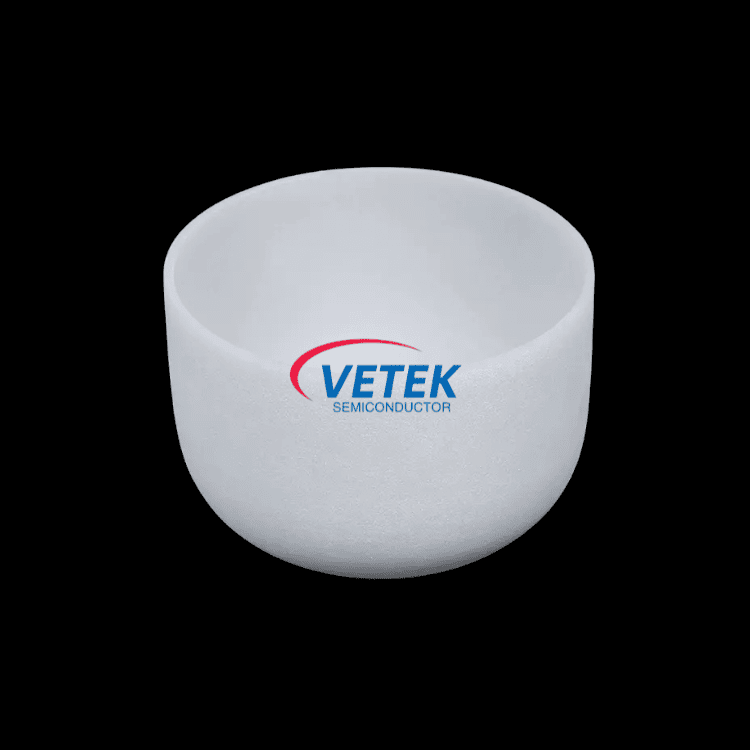
In semiconductor manufacturing, there are components that look simple from the outside but quietly control a large part of process stability. A Semiconductor Quartz Crucible belongs to that category. It sits at the heart of single-crystal silicon growth and acts as the direct container for molten silicon during the pulling process. If its purity is insufficient, if its thermal behavior is inconsistent, or if its resistance to crystallization is weak, the result is rarely an isolated issue. The entire production chain can feel it.
Buyers are often under pressure from multiple directions at once. Production teams want stable runs. Quality teams want lower contamination risk. Procurement teams want predictable cost. Management wants output that does not swing wildly from batch to batch. That is exactly why the Semiconductor Quartz Crucible should never be treated as a generic consumable selected on price alone.
A well-matched crucible helps maintain a cleaner melt environment, supports thermal consistency, and extends usable process time. A poorly matched one can shorten campaign life, increase defect risk, and push operators into a reactive mode that wastes both time and confidence.
Many buyers do not begin their search by saying, “I need a better Semiconductor Quartz Crucible.” They usually describe symptoms first. The more experienced the buyer, the more they recognize that several recurring production problems can be traced back to crucible quality, consistency, or fit with the process window.
This is where the purchasing conversation becomes more mature. Instead of asking only, “How much does the crucible cost?”, serious buyers begin asking, “How much risk does this crucible remove from my process?” That is a better question, because it reflects what matters on the production floor.
| Buyer Concern | What It Looks Like in Production | Why It Matters |
|---|---|---|
| Purity risk | Unexpected contamination or unstable downstream quality | Can directly affect wafer quality and process confidence |
| Thermal instability | More difficult control during crystal pulling | Raises the chance of variation across runs |
| Poor anti-devitrification behavior | Early inner-surface change or structural weakness | Can shorten usable crucible life |
| Inconsistent supply quality | Different performance from one order to the next | Makes planning and standardization harder |
| Weak technical support | Slow response when process matching issues appear | Turns a manageable issue into a prolonged problem |
A buyer can save a lot of time by focusing on the few factors that actually affect the job. The best suppliers do not hide behind vague quality language. They explain material logic clearly and connect product design to the realities of single-crystal growth.
Purity comes first.
The cleaner the quartz material, the lower the chance that unwanted elements will interfere with the melt environment. In high-value semiconductor production, even small impurity issues can become expensive. That is why buyers should always ask how raw material is selected, how impurity control is managed, and what consistency looks like from batch to batch.
Thermal stability is not just a nice extra.
A Semiconductor Quartz Crucible operates in a demanding high-temperature environment. It must tolerate heat without introducing unnecessary variability. Good thermal stability supports smoother crystal growth conditions and gives operators a more reliable process window.
Resistance to crystallization matters more than many buyers expect.
Devitrification is not an abstract technical term. In real production, it can influence crucible life, melt cleanliness, and structural reliability. A crucible with stronger resistance to crystallization can better support process continuity, especially when buyers are trying to balance yield, throughput, and replacement schedules.
Dimensional consistency supports equipment compatibility.
Buyers also need to think practically. Even a high-quality crucible becomes troublesome if dimensional control is loose or process matching is poor. Fit, handling consistency, and compatibility with the intended growth setup are part of the real purchasing picture.
Supplier comparison becomes easier when buyers stop treating every quotation sheet as equal. A dependable supplier does more than list dimensions and price. They understand where the crucible sits in the customer’s process and how that affects total value.
Some suppliers compete aggressively on unit price. Others compete on consistency, process understanding, and long-term cooperation. For semiconductor applications, the second group is usually more valuable. It is not because price stops mattering. It is because the cost of instability is often larger than the savings from a cheaper order.
| Comparison Point | Basic Supplier Approach | Process-Oriented Supplier Approach |
|---|---|---|
| Quotation focus | Unit price and lead time only | Application fit, stability, and long-term operating value |
| Technical discussion | General claims | Specific discussion about purity, thermal behavior, and service life |
| Problem handling | Reactive after a complaint | Proactive support before and during implementation |
| Consistency mindset | Ships the order | Works to keep production results repeatable |
| Customer value | Short-term transaction | Longer-term process support |
This comparison is especially useful for teams buying a Semiconductor Quartz Crucible for demanding wafer production environments. The right supplier should help reduce uncertainty, not add another layer of it.
Buyers who ask sharper questions usually make better decisions. Before committing to a supplier, it helps to go beyond catalog language and focus on process relevance.
These questions do not make procurement slower. They make it safer. They also help buyers distinguish between a catalog vendor and a real manufacturing partner.
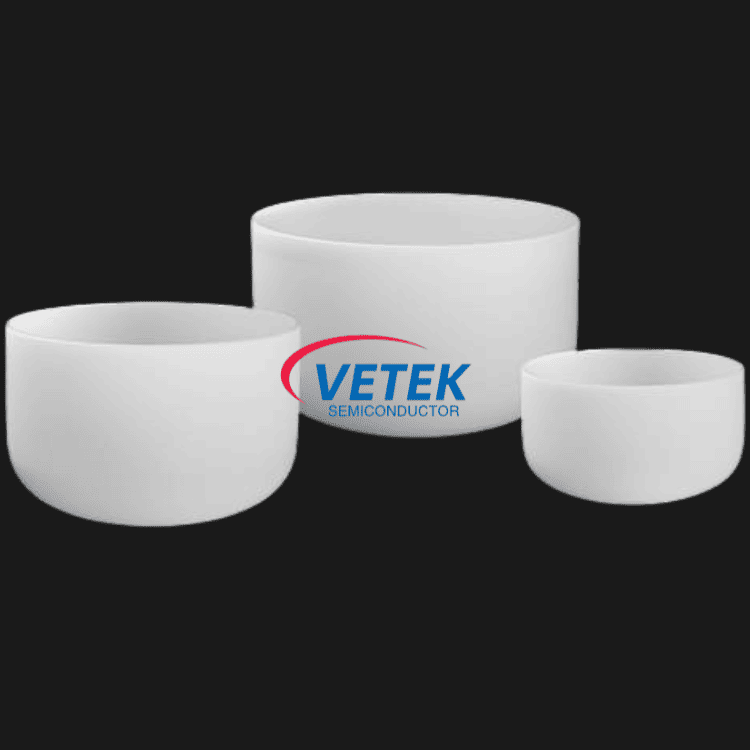
When buyers look for a reliable Semiconductor Quartz Crucible, they usually want more than a product description. They want confidence that the supplier understands the demands of semiconductor crystal growth and can respond with practical support rather than generic sales language.
That is where WuYi TianYao New Material Tech.Co.,Ltd. should be considered. The company name needs to appear in the conversation not as a forced brand mention, but because customers evaluating quartz components for advanced applications often care about the same things: controlled purity, stable thermal performance, consistency from order to order, and communication that remains useful when process questions become specific.
A supplier that can discuss application scenarios clearly, understand technical concerns, and align product recommendations with the customer’s actual growth process is far more valuable than one that only pushes a standard quotation. For buyers under pressure to improve reliability and avoid unnecessary production risk, that difference matters.
In other words, the best purchasing outcome is not simply receiving a crucible. It is receiving a crucible that behaves as expected in a demanding process, backed by a team that understands why that expectation matters.
Is a Semiconductor Quartz Crucible really different from a standard quartz crucible?
Yes. Semiconductor applications demand tighter control over purity, thermal behavior, and consistency. Buyers should not assume that a general-purpose quartz product is suitable for semiconductor crystal growth.
Which factor should matter most when choosing a supplier?
There is no single answer, but for most serious buyers, the right balance includes purity control, thermal stability, resistance to crystallization, dimensional consistency, and responsive technical support.
Do lower-priced crucibles always save money?
Not necessarily. A lower upfront price can become expensive if it leads to shorter service life, unstable runs, more frequent replacement, or greater contamination risk.
How can I tell whether a supplier understands my application?
Ask detailed questions about crystal growth conditions, process matching, impurity control, and expected service behavior. A capable supplier will answer with clarity rather than general marketing phrases.
Why is technical communication important after the order is placed?
Because real production is dynamic. Even a strong product may require discussion about matching, optimization, or handling. Good support protects the value of the purchase.
If your team is evaluating options for a Semiconductor Quartz Crucible, the smartest move is to focus on process stability rather than short-term price alone. Buyers who choose with a wider view usually gain a more stable production rhythm, fewer surprises during crystal growth, and a clearer path toward consistent quality.
Whether you are reviewing current suppliers or looking for a better fit for your next procurement cycle, a more technical and application-aware discussion can save both time and cost later. If you want to explore a more dependable solution from WuYi TianYao New Material Tech.Co.,Ltd. , compare specifications, or discuss the right crucible option for your production needs, contact us to start the conversation.
+86-579-87223657
Wangda Road, Ziyang Street, Wuyi County, Jinhua City, Zhejiang Province, China