




QR Code

Products
Contact Us


Fax
+86-579-87223657

Email

Address
Wangda Road, Ziyang Street, Wuyi County, Jinhua City, Zhejiang Province, China



In Silicon Carbide (SiC) epitaxy systems, many key reactor components remain unfamiliar outside the semiconductor manufacturing industry. One of these components is the “Halfmoon,” a graphite-based structural part commonly used inside LPE reaction chambers.
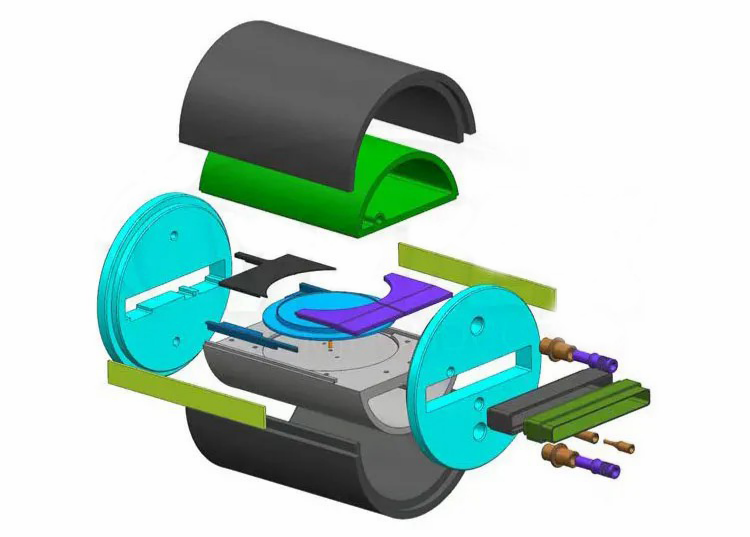
Although the Halfmoon is not a wafer carrier itself, it plays an important role in maintaining reactor stability during high-temperature epitaxial growth processes. As SiC semiconductor manufacturing moves toward larger wafers and stricter process control, the design and material performance of internal reactor components have become increasingly important.
Understanding the LPE Reaction Chamber
LPE (Liquid Phase Epitaxy) is a crystal growth technique used in semiconductor manufacturing. In SiC epitaxy systems, the reaction chamber operates under extremely demanding conditions involving:
Modern SiC epitaxy systems such as LPE reactors rely heavily on stable thermal field structures and gas flow management inside the reaction chamber. Even small variations in temperature distribution or gas flow uniformity may directly affect epitaxial layer quality and wafer consistency.
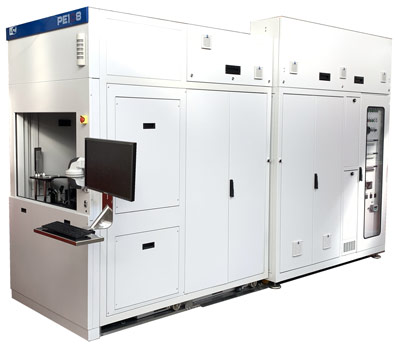
The LPE PE1O6 SiC epitaxy reactor, a horizontal hot-wall system used for advanced SiC wafer growth.
Inside the chamber, multiple graphite-based components work together to create a controlled thermal and chemical environment for epitaxial growth. The Halfmoon is one of these supporting structural components.
Why Is It Called “Halfmoon”?
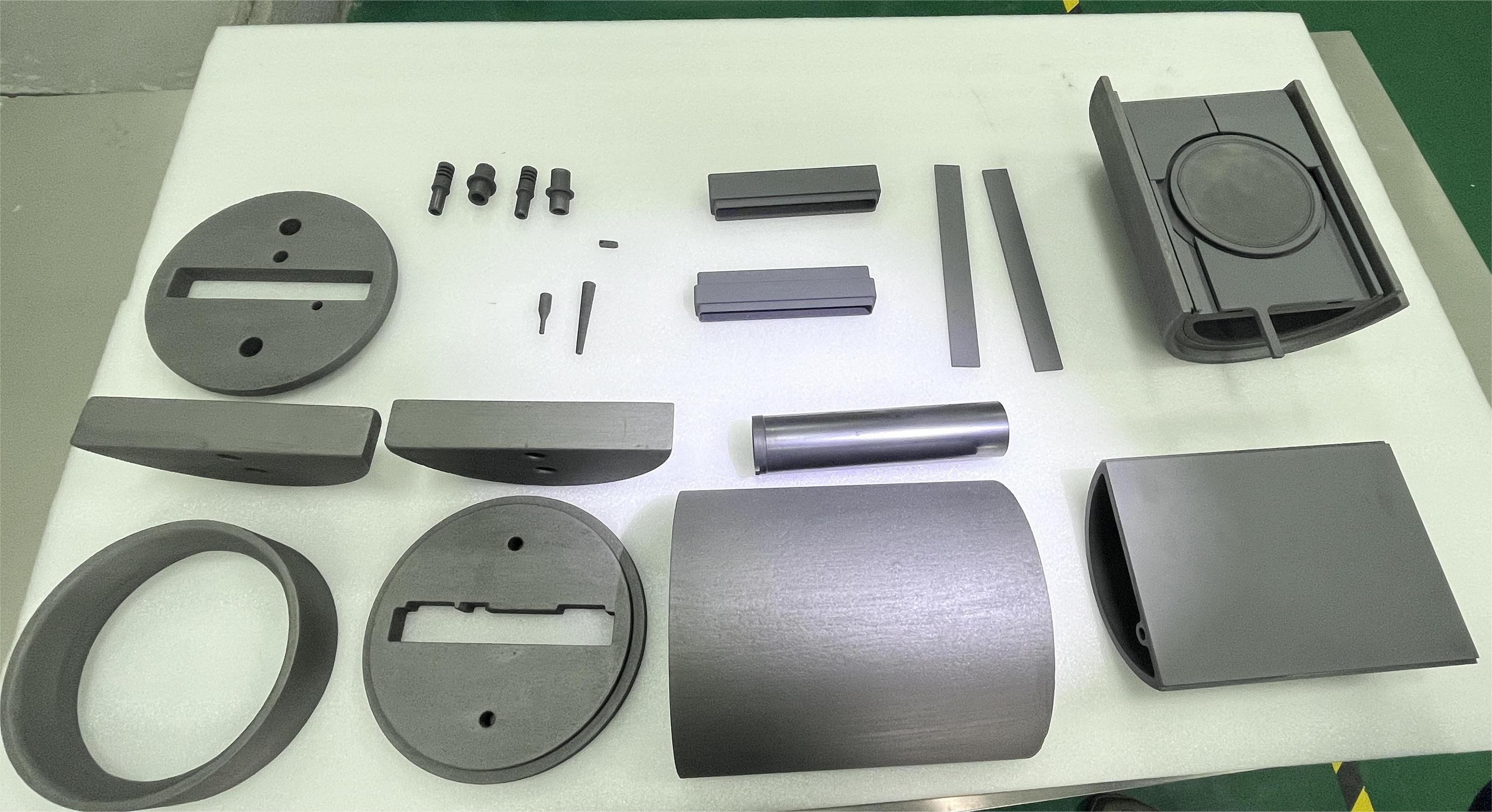
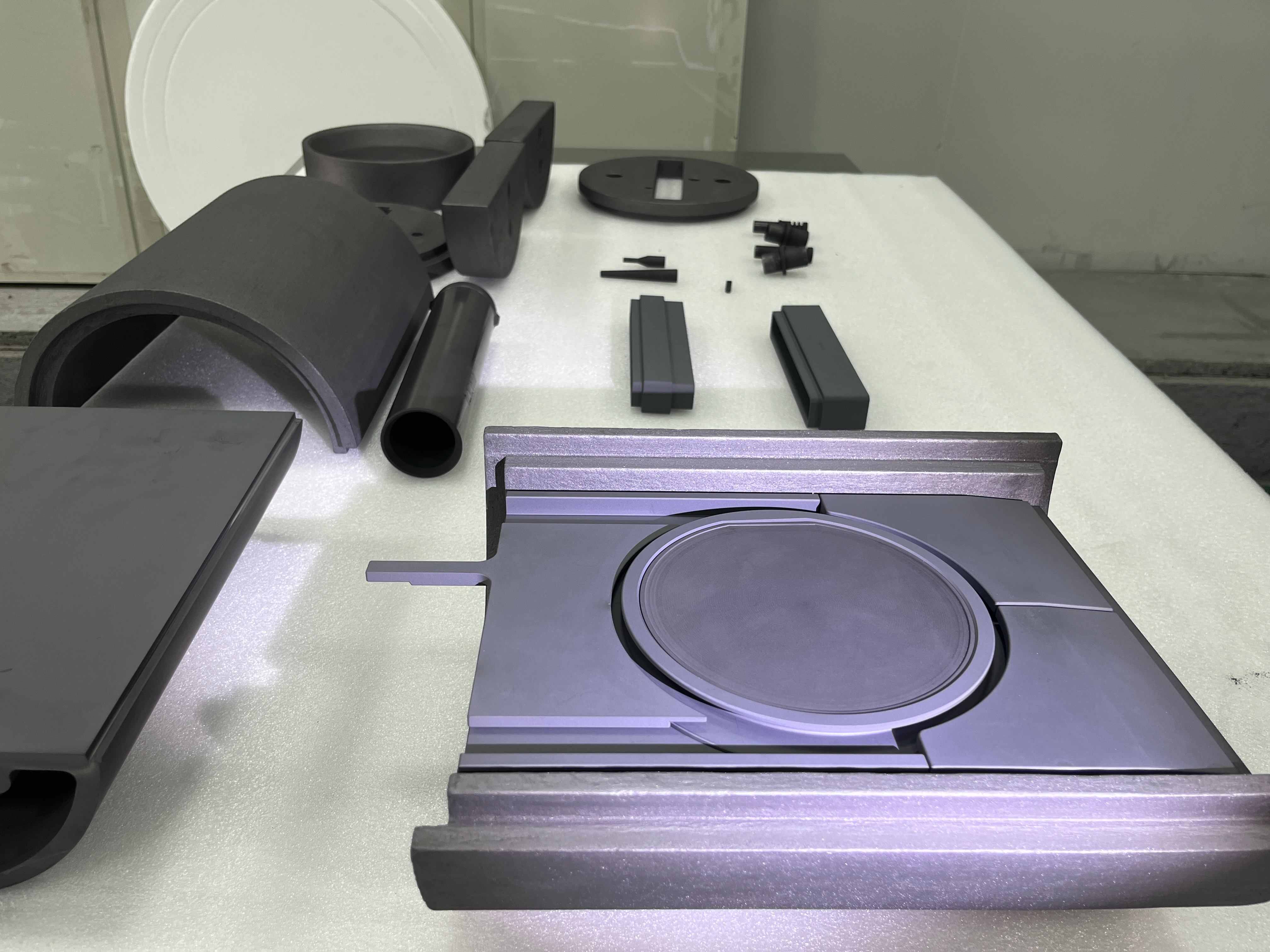
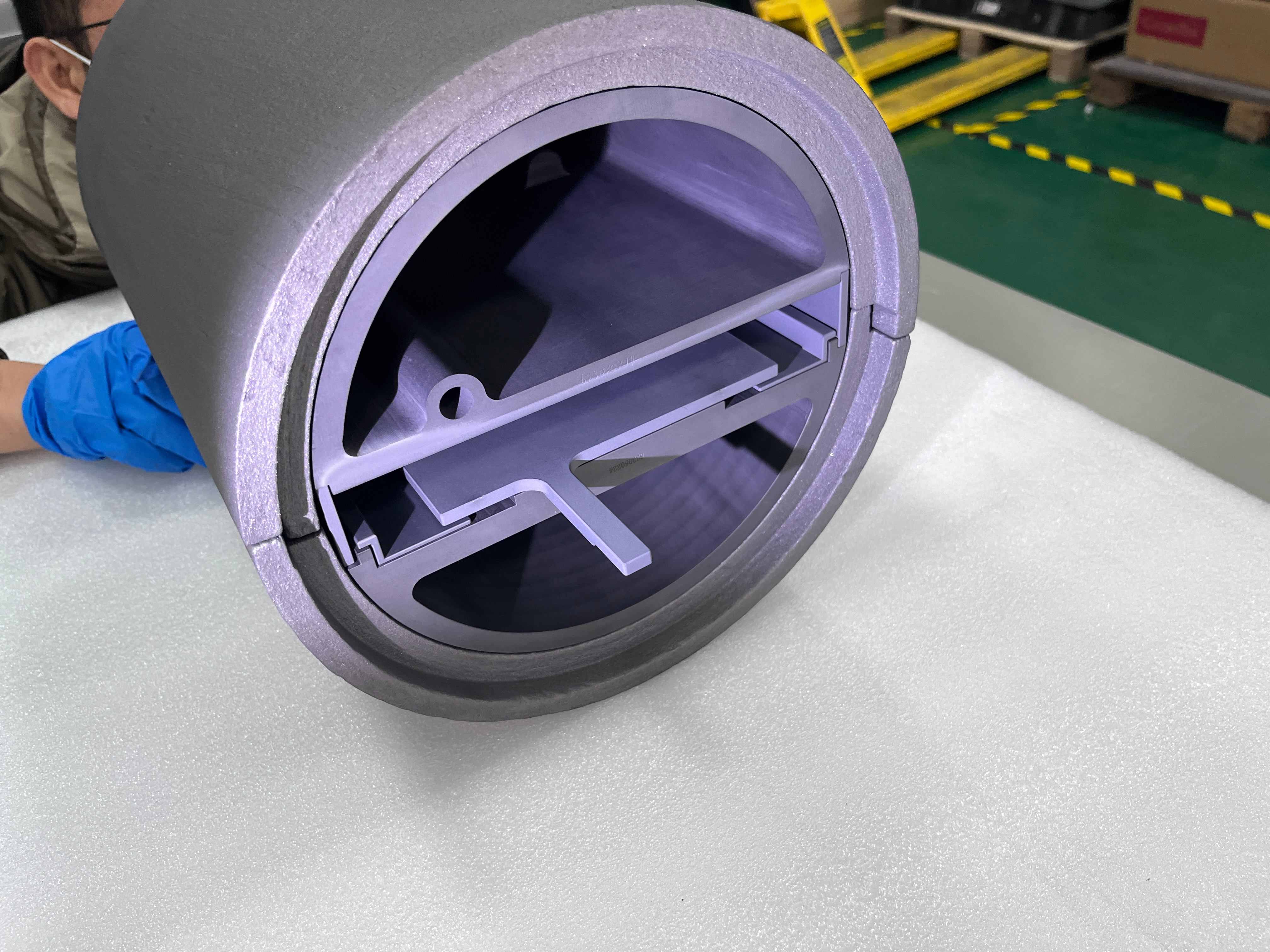
The part gets its name mainly from its shape. In many LPE reactors, the component looks similar to a half-circle or crescent structure when installed around the hot zone area.
Different equipment manufacturers use slightly different designs. Some Halfmoon parts are thicker, some include additional support structures, and some are directly connected with rotating assemblies inside the chamber.
In actual reactor systems, the geometry is usually optimized together with the thermal field and chamber layout rather than following one universal standard.
Functions of the Halfmoon Component
Although reactor designs differ, Halfmoon components commonly contribute to several important functions.
1. Supporting Reactor Structures
Inside an epitaxy reactor, many graphite parts expand and shrink repeatedly during heating cycles. Because of this, the mechanical stability of internal support components becomes important over long production runs.
In some reactor designs, the Halfmoon helps maintain the relative position of nearby chamber structures under high-temperature operating conditions. Even slight deformation may influence chamber alignment or process repeatability.
2. Assisting Gas Flow Stability
Gas flow behavior inside an SiC reactor is more complicated than it appears from the outside. At high temperature, even relatively small structural changes inside the chamber may alter local flow conditions.
Depending on the reactor platform, the Halfmoon may indirectly influence how process gases move around the hot zone region. This is one reason why internal chamber geometry is often carefully optimized during reactor development.
3. Thermal Field Coordination
Modern epitaxy systems require carefully controlled thermal gradients. The arrangement of graphite components inside the chamber influences heat distribution and thermal efficiency.
Halfmoon components can indirectly affect:
This becomes increasingly important for large-size wafer processing.
4. Supporting Mechanical Rotation Systems
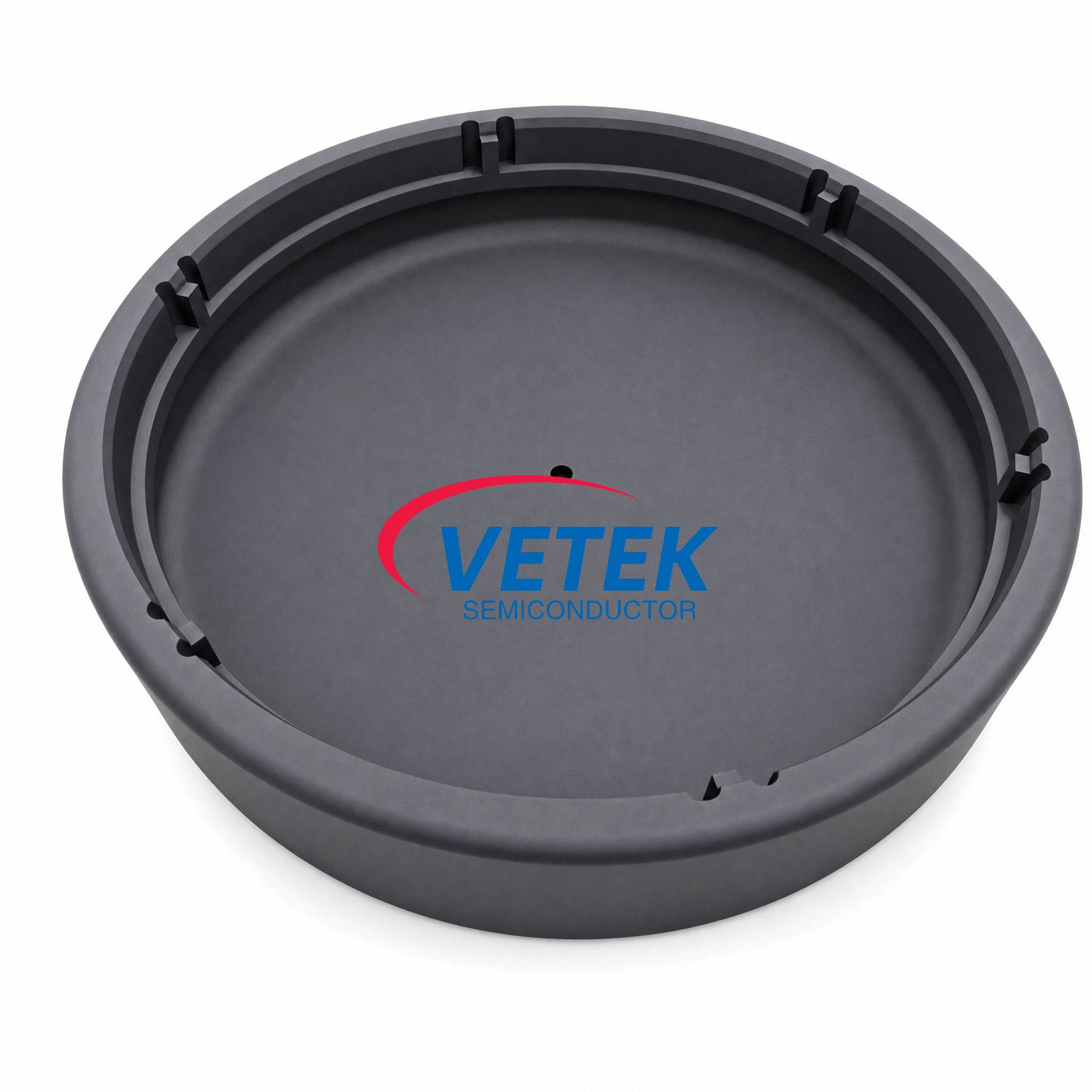
Some LPE systems use rotating assemblies to improve deposition uniformity during epitaxial growth. In these configurations, the Lower Halfmoon may be integrated with nearby rotating or support structures inside the chamber.
The mechanical requirements can become quite demanding because the reactor must operate continuously under both high temperature and chemically reactive conditions.
Why Graphite Is Still Widely Used in Reactor Systems
Even today, graphite remains one of the most practical materials for semiconductor thermal field applications. It is relatively lightweight, can be machined into complex shapes, and maintains stable properties at temperatures where many metals would fail.
For reactor manufacturers, another advantage is that graphite responds well to precision machining, which is important for components installed inside narrow chamber spaces.
At the same time, bare graphite also has limitations. Under long-term exposure to reactive process gases and repeated thermal cycling, the surface may gradually degrade or generate particles. Because of this, coated graphite structures are now commonly used in modern SiC epitaxy systems.
The Role of CVD SiC Coating
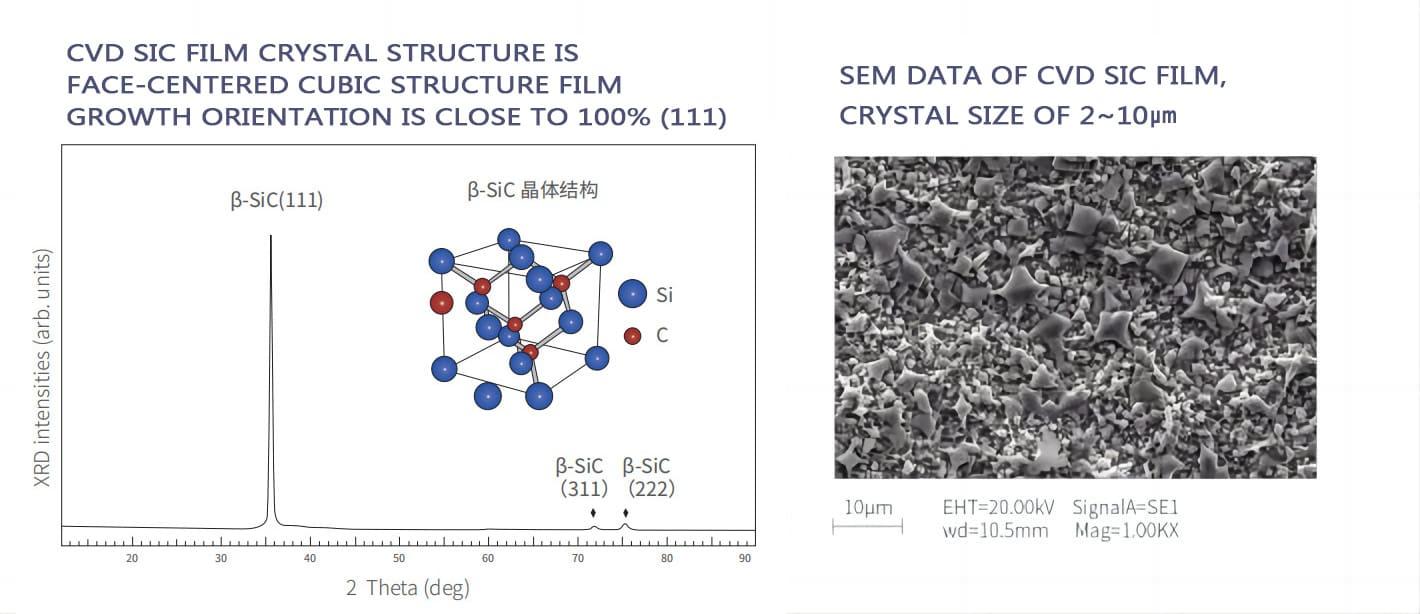
CVD SiC (Chemical Vapor Deposition Silicon Carbide) coating is widely used on graphite reactor components in SiC epitaxy systems.
The coating forms a dense protective layer on the graphite surface, helping improve:
SiC-coated graphite components are now commonly found in:
Why More Companies Are Studying TaC Coatings
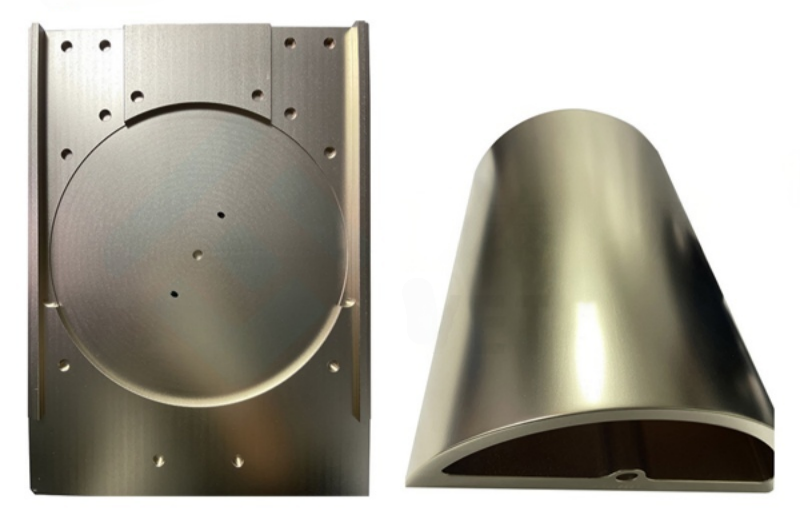
In recent years, TaC coating has started attracting more attention in advanced semiconductor thermal field applications, especially in high-temperature SiC processes.
One reason is that some next-generation crystal growth systems operate under conditions where conventional coating materials may face greater thermal and chemical stress over long process cycles.
Compared with traditional SiC coatings, TaC generally shows stronger chemical stability at extremely high temperatures. Because of this, researchers and equipment manufacturers are continuing to evaluate its potential for future high-temperature reactor systems.
Thermal Insulation Materials Around the Reactor
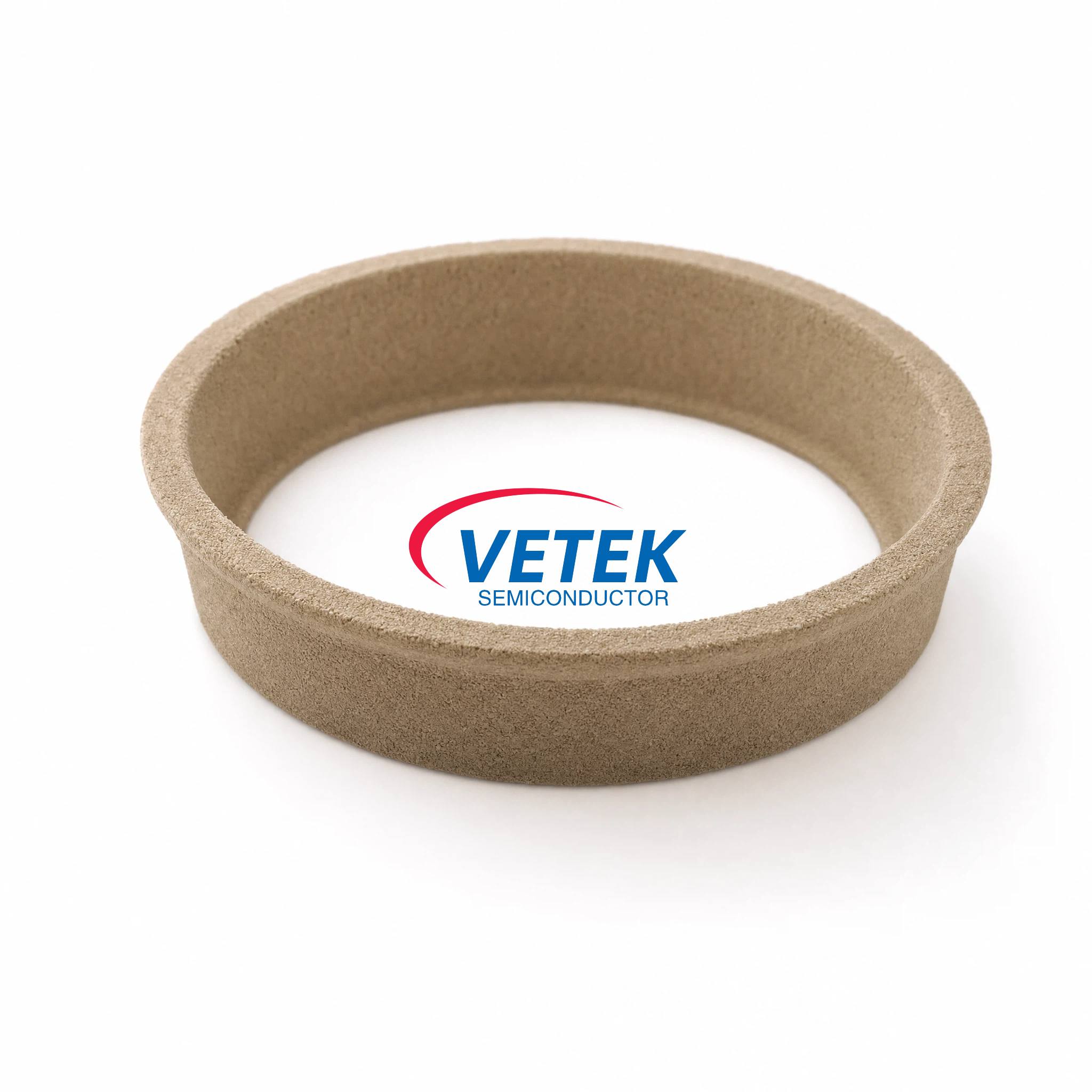
Besides structural graphite parts, thermal insulation materials also strongly influence reactor performance.
Semiconductor systems often use:
These materials help reduce heat loss and maintain stable temperature distribution during long growth cycles.
Increasing Demands in Modern SiC Epitaxy
As the SiC industry moves toward 200 mm wafer platforms, internal reactor components face increasingly strict requirements for thermal stability, dimensional precision, and contamination control.
The rapid development of electric vehicles, renewable energy systems, and high-frequency power electronics is accelerating demand for SiC wafers.
As wafer sizes increase from 4-inch to 6-inch and 8-inch platforms, reactor components must meet stricter requirements for:
Even supporting chamber components such as Halfmoon assemblies are becoming more technically demanding.
Conclusion
The Halfmoon may appear to be a relatively simple graphite structure inside an LPE reaction chamber, but it contributes to several important aspects of reactor operation, including thermal stability, gas flow coordination, and mechanical support.
Its evolution also reflects broader trends in semiconductor manufacturing: higher temperatures, cleaner processes, larger wafers, and more advanced material engineering.
As SiC epitaxy technology continues to develop, reactor components and coating technologies will likely become even more specialized and performance-driven.
+86-579-87223657
Wangda Road, Ziyang Street, Wuyi County, Jinhua City, Zhejiang Province, China