





QR Code

Products
Contact Us


Fax
+86-579-87223657

Email

Address
Wangda Road, Ziyang Street, Wuyi County, Jinhua City, Zhejiang Province, China



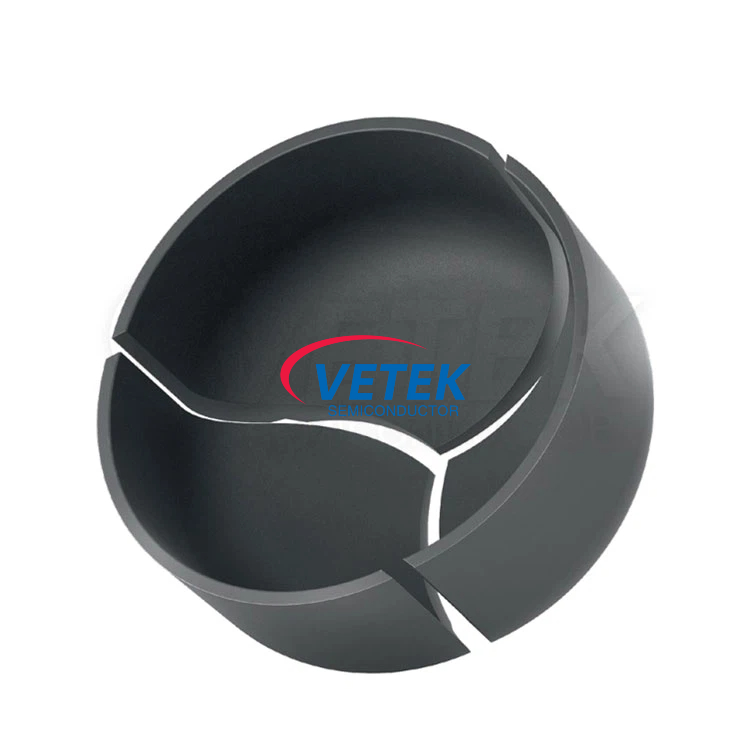
A Glassy Carbon Coated Graphite Crucible is an advanced thermal processing component designed for demanding applications such as semiconductor manufacturing, crystal growth, vacuum heat treatment, and high-temperature material research. This article explains its structure, advantages, applications, and selection considerations. VeTek Semiconductor provides high-performance crucible solutions that combine glassy carbon coating technology with precision graphite manufacturing to meet the strict requirements of modern industries.
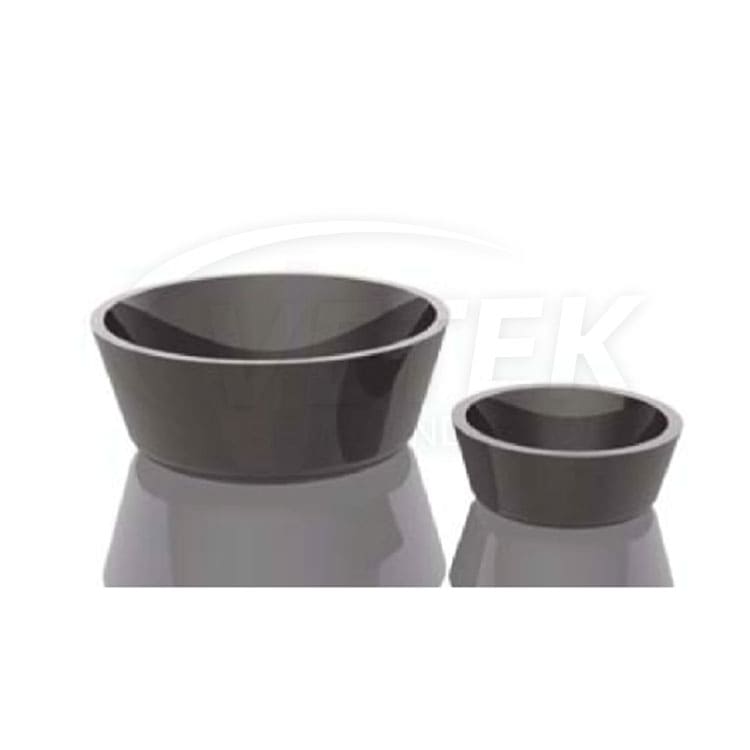
A Glassy Carbon Coated Graphite Crucible is a specialized high-temperature container made by applying a dense glassy carbon layer onto a high-quality graphite substrate. The combination creates a component with excellent thermal stability, chemical resistance, and contamination control capabilities.
In semiconductor and advanced material industries, crucibles must maintain stable performance under extreme environments involving high temperatures, vacuum conditions, reactive gases, and corrosive materials. The glassy carbon coating works as a protective barrier, reducing direct contact between graphite and processed materials while improving purity and service life.
Compared with conventional graphite crucibles, this coated design provides improved resistance against oxidation and chemical erosion. It is especially suitable for applications requiring ultra-clean processing environments, including silicon carbide (SiC) crystal growth, semiconductor wafer production, and laboratory material synthesis.
The performance of a Glassy Carbon Coated Graphite Crucible depends on the combination of two carefully engineered materials: graphite and glassy carbon.
| Component | Function | Performance Contribution |
|---|---|---|
| High-Purity Graphite Body | Provides mechanical strength and thermal conductivity | Maintains structural stability under high-temperature cycles |
| Glassy Carbon Coating | Creates a protective and chemically stable surface | Reduces contamination and improves corrosion resistance |
| Precision Manufacturing Process | Ensures dimensional accuracy | Supports reliable installation and repeatable production |
The glassy carbon layer has a smooth, non-porous structure that prevents molten materials or gases from penetrating into the graphite base. This feature makes the crucible highly valuable in applications where material purity and process consistency are critical.
A Glassy Carbon Coated Graphite Crucible offers several technical benefits that make it an important choice for advanced manufacturing environments.
These advantages make the crucible suitable for manufacturers seeking stable production performance and improved material quality in high-value applications.
Due to its unique physical and chemical properties, the Glassy Carbon Coated Graphite Crucible is widely applied across multiple high-tech industries.
| Industry | Application | Main Requirement |
|---|---|---|
| Semiconductor Manufacturing | Crystal growth and thermal processing | High purity and contamination prevention |
| Photovoltaic Industry | Silicon material processing | Stable temperature performance |
| Material Research | High-temperature experiments | Chemical resistance and durability |
| Vacuum Furnace Applications | Heat treatment processes | Low outgassing performance |
In semiconductor production, even small levels of contamination can affect product yield. Therefore, using a high-quality coated crucible helps maintain a cleaner processing environment and supports consistent manufacturing results.
Selecting the appropriate crucible material directly influences production efficiency and final product quality. The following comparison highlights the differences between standard graphite crucibles and glassy carbon coated designs.
| Features | Traditional Graphite Crucible | Glassy Carbon Coated Graphite Crucible |
|---|---|---|
| Surface Protection | Limited oxidation protection | Advanced protective carbon coating |
| Chemical Stability | Moderate resistance | Excellent resistance against chemical reactions |
| Purity Control | Higher contamination possibility | Reduced impurity release |
| Application Range | General thermal applications | Semiconductor and precision industries |
Choosing the correct Glassy Carbon Coated Graphite Crucible requires consideration of several factors related to operating conditions and production goals.
Working with an experienced manufacturer helps ensure that the crucible design matches specific industrial requirements and operating environments.
Its main purpose is to provide a high-purity, chemically stable container for high-temperature processes. The glassy carbon coating protects the graphite substrate and reduces contamination during advanced material processing.
Yes. It is widely used in semiconductor-related processes because it offers excellent thermal stability, low impurity release, and strong resistance to chemical reactions.
The coating reduces oxidation, chemical corrosion, and material penetration into the graphite structure, helping extend operational life under demanding conditions.
Semiconductor manufacturing, photovoltaic production, laboratory research, vacuum furnace processing, and advanced material industries can benefit from its high-performance characteristics.
A Glassy Carbon Coated Graphite Crucible combines the excellent thermal properties of graphite with the superior chemical stability of glassy carbon, making it an ideal solution for high-temperature and high-purity applications. With increasing demands for cleaner semiconductor manufacturing and advanced material processing, this technology continues to play an important role in improving production reliability and product quality.
For customized crucible solutions, professional technical support, and reliable high-temperature material components, please contact us to discuss your specific application requirements and receive expert assistance from an experienced supplier.
+86-579-87223657
Wangda Road, Ziyang Street, Wuyi County, Jinhua City, Zhejiang Province, China