




QR Code

Products
Contact Us


Fax
+86-579-87223657

Email

Address
Wangda Road, Ziyang Street, Wuyi County, Jinhua City, Zhejiang Province, China



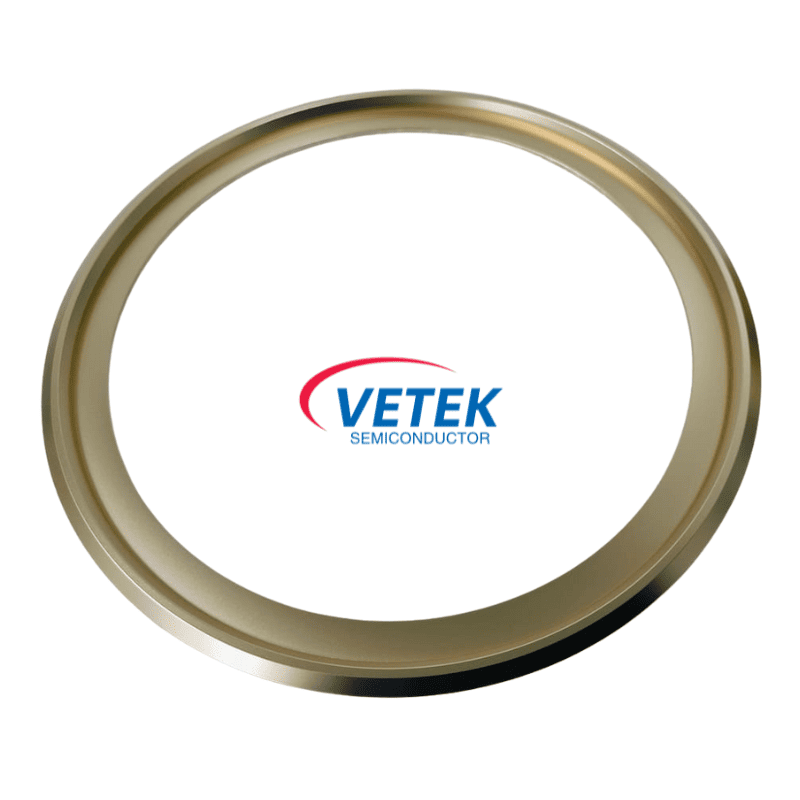
As semiconductor manufacturing continues to evolve toward higher precision, purity, and thermal stability, advanced coating materials have become critical components in process equipment. Among them, the Tantalum Carbide Coating Ring stands out for its exceptional resistance to high temperatures, corrosion, plasma erosion, and particle contamination.
VeTek has developed high-quality Tantalum Carbide Coating Ring solutions designed specifically for demanding semiconductor applications such as epitaxy, CVD, MOCVD, and silicon carbide crystal growth. This article explores the structure, properties, manufacturing process, applications, benefits, and selection considerations of tantalum carbide coated rings, helping engineers and procurement professionals understand why they are becoming indispensable in next-generation semiconductor production.

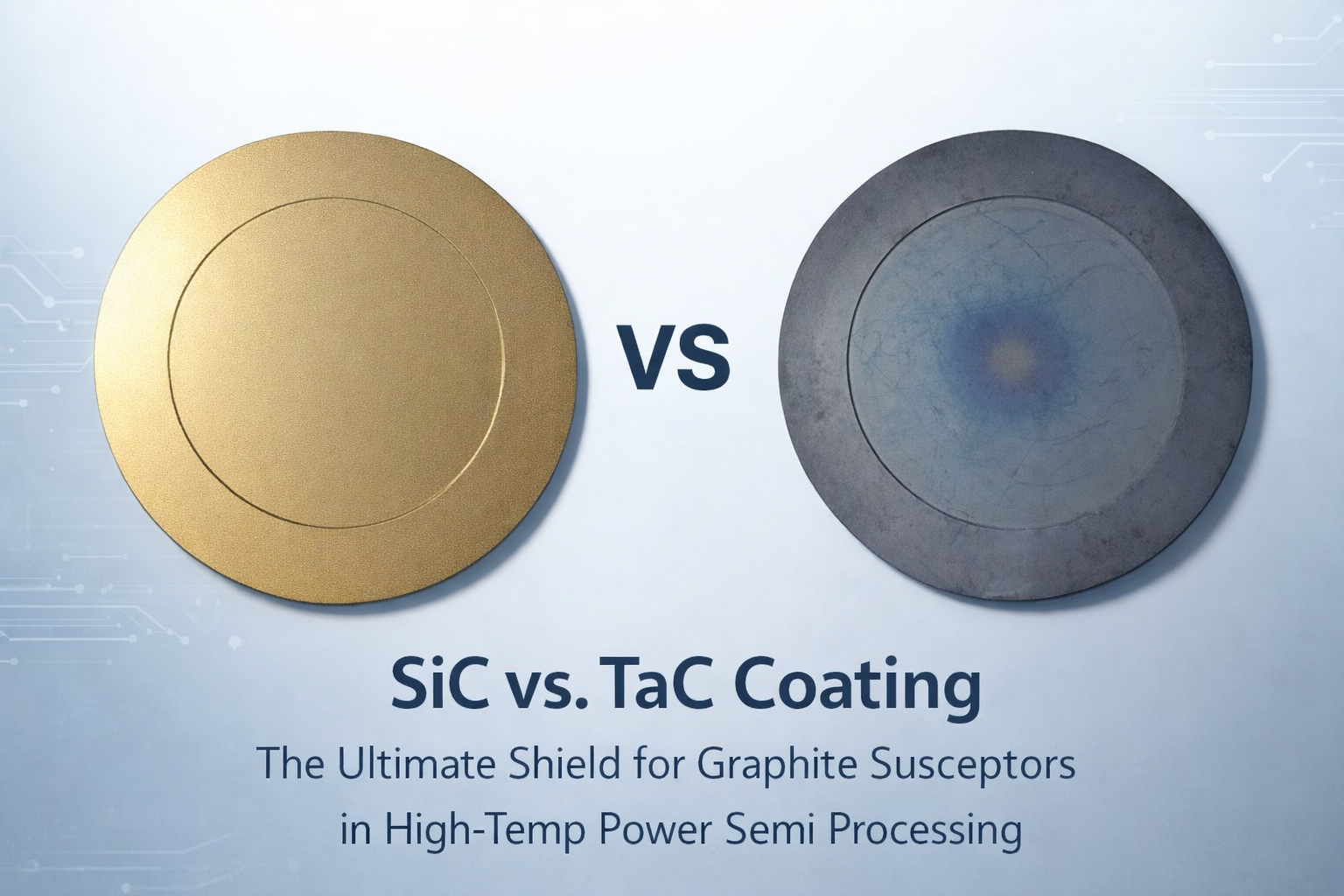
A Tantalum Carbide Coating Ring is a high-performance graphite or carbon-based component coated with a dense layer of tantalum carbide (TaC). The coating significantly improves the substrate's resistance to extreme temperatures, chemical corrosion, plasma attack, and wear.
Tantalum carbide possesses one of the highest melting points among known ceramic materials, reaching approximately 3880°C. This extraordinary thermal stability makes it highly suitable for harsh semiconductor processing environments where conventional materials may degrade or contaminate wafers.
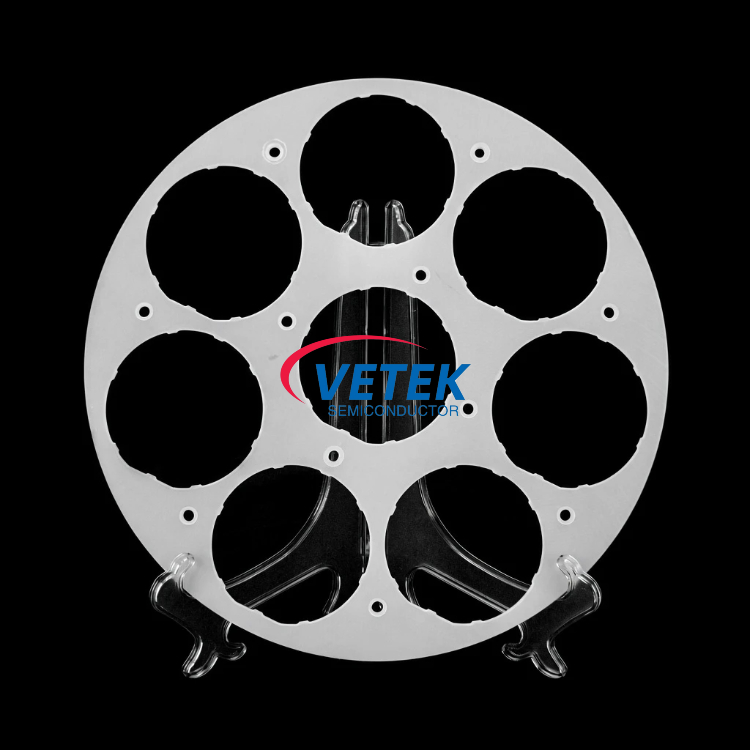
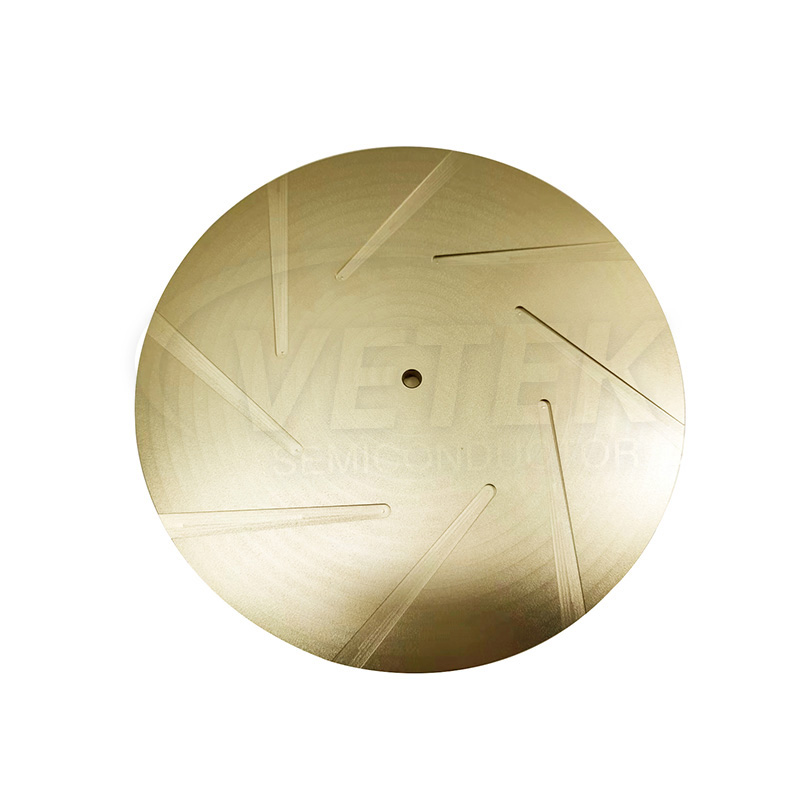
In semiconductor equipment, TaC-coated rings are often installed in reaction chambers, wafer carriers, susceptors, crystal growth systems, and epitaxial reactors to ensure process consistency and minimize contamination.
The superior performance of tantalum carbide coatings comes from their unique combination of physical and chemical characteristics.
| Property | Tantalum Carbide (TaC) | Industry Benefit |
|---|---|---|
| Melting Point | ~3880°C | Excellent thermal stability |
| Hardness | Very High | Outstanding wear resistance |
| Chemical Stability | Excellent | Corrosion protection |
| Plasma Resistance | Superior | Longer service life |
| Purity | Ultra-High | Reduced particle contamination |
| Thermal Conductivity | High | Improved heat distribution |
These properties make tantalum carbide coating one of the most reliable protective layers available for advanced semiconductor manufacturing equipment.
Semiconductor fabrication requires strict control over contamination, temperature uniformity, and process repeatability. Tantalum carbide coated rings help achieve these objectives in multiple ways.
High-temperature semiconductor processes often exceed 1500°C. TaC coatings maintain structural integrity under these extreme conditions, reducing component deformation and performance degradation.
Particle contamination is a major concern in wafer manufacturing. Dense TaC coatings minimize surface erosion, significantly lowering particle generation during operation.
Compared with uncoated graphite components, TaC-coated rings demonstrate substantially longer service life, reducing replacement frequency and maintenance costs.
Semiconductor reactors are exposed to reactive gases and corrosive process environments. TaC coatings provide excellent resistance against chemical attack, maintaining component reliability over extended production cycles.
Stable thermal and chemical properties contribute to uniform process conditions, improving wafer yield and reducing variability between production batches.
Tantalum carbide coating rings are widely used across advanced semiconductor and crystal growth industries.
As demand for SiC power devices and advanced semiconductor technologies increases, the need for durable TaC-coated components continues to grow worldwide.
| Coating Material | Temperature Resistance | Corrosion Resistance | Plasma Resistance | Semiconductor Suitability |
|---|---|---|---|---|
| Tantalum Carbide | Excellent | Excellent | Excellent | Excellent |
| Silicon Carbide | Very Good | Very Good | Good | Very Good |
| Pyrolytic Carbon | Good | Moderate | Moderate | Good |
| Alumina Coating | Moderate | Good | Moderate | Limited |
Among available coating solutions, tantalum carbide generally offers the best overall performance for demanding semiconductor applications where contamination control and durability are critical.
Producing a high-quality Tantalum Carbide Coating Ring requires sophisticated coating technology and strict quality control.
The quality of coating adhesion, thickness uniformity, and surface smoothness directly influences the performance and lifespan of the final component.
Choosing the correct TaC-coated ring involves evaluating several important factors.
For critical semiconductor applications, partnering with experienced suppliers such as VeTek Tantalum Carbide Coating Ring manufacturing specialists can help ensure optimal process performance and long-term equipment reliability.
The semiconductor industry is rapidly moving toward higher-performance materials capable of supporting next-generation power electronics, electric vehicles, AI computing infrastructure, and advanced communication technologies.
As silicon carbide and gallium nitride device production expands, demand for high-purity tantalum carbide coated components is expected to increase significantly. Future developments are likely to focus on:
These advancements will further strengthen the position of tantalum carbide coatings as a critical enabling technology in semiconductor manufacturing.
Its primary purpose is to protect semiconductor equipment components from extreme temperatures, corrosion, plasma erosion, and contamination while improving operational stability.
Tantalum carbide offers an exceptional combination of high melting point, chemical stability, hardness, and plasma resistance, making it ideal for demanding semiconductor environments.
They are widely used in SiC crystal growth systems, CVD reactors, MOCVD equipment, epitaxial growth chambers, and other advanced semiconductor processing systems.
The lifespan depends on operating conditions, but TaC-coated rings generally last significantly longer than uncoated graphite components due to their superior resistance to wear and corrosion.
Yes. Dense and stable TaC coatings minimize particle generation and surface degradation, helping maintain ultra-clean semiconductor manufacturing environments.
The Tantalum Carbide Coating Ring has become a critical component in advanced semiconductor manufacturing due to its outstanding thermal stability, corrosion resistance, purity, and durability. As semiconductor technologies continue to advance, the demand for high-performance TaC-coated components will only increase. If you are looking for reliable, semiconductor-grade coating solutions that improve equipment longevity and process consistency, VeTek can provide professional support and customized products tailored to your specific application requirements. Contact us today to discuss your project, request technical specifications, or obtain a competitive quotation from our engineering team.
+86-579-87223657
Wangda Road, Ziyang Street, Wuyi County, Jinhua City, Zhejiang Province, China