

QR Code

Products
Contact Us


Fax
+86-579-87223657

Email

Address
Wangda Road, Ziyang Street, Wuyi County, Jinhua City, Zhejiang Province, China



A SiC coated graphite susceptor for ASM is not just a replacement part inside an epitaxy system. It is a process-critical carrier that influences thermal uniformity, wafer cleanliness, coating durability, chamber stability, and long-term production cost. For engineers and purchasing teams working with ASM epitaxial equipment, the real challenge is rarely about finding a susceptor that looks similar. The harder question is whether the susceptor can stay dimensionally stable, resist corrosive gases, control particle risk, and support repeatable wafer performance through demanding high-temperature cycles.
This article explains how buyers can evaluate a SiC coated graphite susceptor for ASM from a practical production perspective. It covers pain points such as coating peeling, contamination, thermal drift, short service life, dimensional mismatch, and unstable process output. It also discusses what to check before purchasing, how to compare technical specifications, and why a reliable manufacturing partner matters when the component is used in SiC, GaN, silicon-based, RF, and power device epitaxy processes.
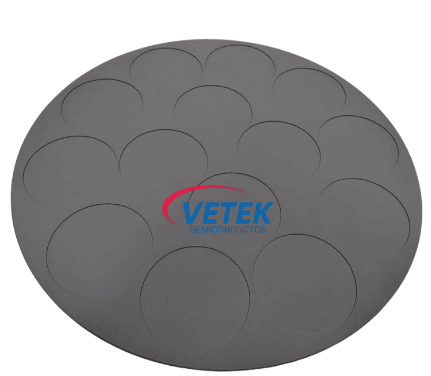
In an epitaxy process, the susceptor does more than hold a wafer in place. It acts as the physical interface between the wafer, the thermal field, the reactive gas environment, and the equipment platform. When a SiC coated graphite susceptor for ASM performs well, the wafer receives more stable heat transfer, the chamber environment stays cleaner, and the process can run with fewer interruptions.
In many production lines, engineers begin to notice susceptor problems indirectly. The first sign may not be a visibly damaged part. It may appear as wafer-to-wafer inconsistency, unusual particles, drifting film thickness, resistivity variation, or a shorter-than-expected maintenance cycle. By the time the part shows obvious cracking, peeling, or surface erosion, the process may already have suffered repeated instability.
This is why the purchasing decision should not focus only on price or visual similarity. A qualified SiC coated graphite susceptor for ASM must match the ASM equipment structure, survive repeated thermal cycling, resist process gases, and maintain a clean surface condition under demanding epitaxial conditions. For semiconductor manufacturing, a low-cost component that causes downtime is rarely low-cost in the end.
Key buyer concern
The real value of the susceptor is measured by process stability, service life, contamination control, and compatibility with the actual production recipe, not by appearance alone.
Many buyers contact suppliers only after they have already experienced production trouble. Their previous susceptor may have looked acceptable at the beginning, but failed after several heating and cooling cycles. The most common problems are often related to coating quality, graphite purity, machining accuracy, or insufficient understanding of the customer’s process environment.
A poor-quality susceptor can create a chain reaction. If the coating is not dense enough, corrosive gases can attack the graphite base. If the coating adhesion is weak, thermal cycling can cause microcracks or peeling. If the dimensions are not properly controlled, the part may not sit correctly in the tool. If the surface finish is too rough or uneven, particle risks can increase during operation.
When selecting a SiC coated graphite susceptor for ASM, these pain points should be discussed before the order is placed. A serious supplier should be able to talk about material selection, coating process, inspection methods, and customization options in a way that matches the customer’s real production environment.
A dependable SiC coated graphite susceptor for ASM usually combines a high-purity graphite substrate with a dense silicon carbide coating. The graphite base provides machinability, thermal performance, and structural support. The silicon carbide coating protects the graphite surface from direct exposure to high-temperature chemical environments.
The base material matters because graphite is not all the same. A semiconductor-grade susceptor requires high purity, stable density, fine structure, and consistent machining behavior. If the graphite contains excessive impurities or has uneven internal structure, it may affect coating quality and long-term stability.
The coating is equally important. A high-quality SiC coating should be dense, continuous, well bonded, and suitable for repeated thermal cycling. In practical use, the coating must resist erosion from aggressive process gases and reduce the chance of particles entering the wafer environment. The coating surface also needs to be controlled carefully, because surface roughness and local defects can influence cleanliness and repeatability.
WuYi TianYao New Material Tech.Co.,Ltd. understands that semiconductor customers are not simply buying a shaped graphite part. They are looking for a controlled material solution that can support cleaner epitaxial growth, more predictable process results, and longer maintenance intervals.
Before purchasing a SiC coated graphite susceptor for ASM, buyers should compare more than product name and price. The following table gives a practical view of the points that usually matter most during supplier evaluation.
| Evaluation Factor | Why It Matters | What Buyers Should Ask |
|---|---|---|
| ASM equipment compatibility | The susceptor must match the installation position, wafer support structure, cavity design, and equipment interface. | Can the supplier customize dimensions according to drawings, samples, or tool requirements? |
| Graphite substrate purity | High-purity graphite helps reduce contamination risk and supports stable coating formation. | What graphite grade is used, and how is material consistency controlled? |
| SiC coating density | A dense coating protects graphite from corrosive gases and high-temperature erosion. | How does the supplier control coating continuity, pinholes, and surface defects? |
| Coating thickness | Proper thickness supports durability without compromising geometry or thermal performance. | Can the coating thickness be adjusted according to process requirements? |
| Surface roughness | A controlled surface finish helps reduce particle risk and supports cleaner wafer processing. | Is polishing or additional surface treatment available when required? |
| Thermal cycling resistance | The part must withstand repeated heating and cooling without cracking or peeling. | What experience does the supplier have with high-temperature epitaxy applications? |
| Inspection process | Reliable inspection reduces the chance of receiving parts with dimensional or coating defects. | Are appearance, dimension, coating, and final quality checks performed before shipment? |
A professional evaluation should connect these factors with actual process goals. For example, a customer running SiC homoepitaxy may place more emphasis on high-temperature corrosion resistance and long service life. A customer focused on GaN-on-Si may care deeply about thermal consistency and particle control. The right SiC coated graphite susceptor for ASM should be selected according to process reality, not only catalog wording.
Epitaxy is sensitive to small changes. Temperature distribution, gas flow, surface condition, wafer seating, and chamber cleanliness can all influence the final layer quality. A stable SiC coated graphite susceptor for ASM helps reduce variables that engineers do not want to fight every day.
First, thermal uniformity is a major concern. If the susceptor has inconsistent structure, poor machining accuracy, or uneven coating, heat transfer may become unstable. That instability can show up as variation across the wafer or from batch to batch. A carefully manufactured susceptor supports a more predictable thermal field, which helps engineers maintain process windows more confidently.
Second, coating integrity directly affects cleanliness. In high-temperature environments, exposed graphite, microcracks, peeling areas, or weak coating zones can increase contamination risk. A dense and well-adhered SiC coating helps protect the graphite base while reducing particle generation caused by surface degradation.
Third, dimensional accuracy supports repeatable wafer placement. If the wafer does not sit correctly, or if the susceptor does not match the equipment interface, the process may become unstable even when the material itself is acceptable. This is why precise machining and structural replication are important for ASM-related applications.
Finally, durability helps lower hidden cost. A part that lasts longer can reduce replacement frequency, maintenance planning pressure, chamber downtime, and emergency purchasing. For many factories, the most expensive susceptor is not the one with the highest quotation. It is the one that fails during production and forces the tool offline.
Procurement teams often receive similar quotations from different suppliers, but the actual value behind each quotation may be very different. A serious supplier should help the buyer clarify application conditions, not rush the buyer into a standard part without technical discussion.
Before confirming an order for a SiC coated graphite susceptor for ASM, buyers should prepare the basic information below:
These details help the supplier understand whether the buyer needs a standard replacement, a customized geometry, a specific coating thickness, or a more process-oriented solution. For high-value epitaxy systems, this early communication can prevent expensive mistakes.
A reliable supplier should also be able to explain how it controls machining accuracy, coating quality, surface condition, packaging protection, and final inspection. When a buyer cannot visit the factory immediately, clear technical communication becomes even more important.
A SiC coated graphite susceptor for ASM is mainly used in epitaxial processes where wafers require stable support under high temperature and controlled gas conditions. It is especially relevant for advanced semiconductor materials and devices that demand clean, repeatable growth environments.
| Application Area | Typical Production Need | Susceptor Requirement |
|---|---|---|
| SiC power devices | High-temperature epitaxial growth for power electronics substrates. | Excellent heat resistance, corrosion resistance, and coating stability. |
| GaN epitaxy | Support for compound semiconductor growth used in RF, power, and optoelectronic applications. | Clean surface, stable wafer support, and controlled thermal behavior. |
| Silicon-based power devices | Epitaxial layers for advanced power components and related device structures. | Dimensional accuracy, uniform heating, and low particle risk. |
| RF device manufacturing | Stable epitaxial quality for high-frequency device performance. | Repeatable process support and reliable surface protection. |
| Research and pilot production | Process development, recipe validation, and small-batch material testing. | Customization flexibility and dependable technical support. |
The same part name may appear in different application scenarios, but the exact requirements may not be identical. A factory working on high-volume production may care most about lifetime and consistency. A research team may need flexible customization. A maintenance team may prioritize fast replacement and accurate fit. This is why supplier communication should always begin with the real process environment.
Even a well-made SiC coated graphite susceptor for ASM needs proper handling. Semiconductor components are sensitive to contamination, impact, sudden temperature changes, and incorrect cleaning methods. Good operating habits can extend service life and protect process stability.
Maintenance teams should also communicate with the supplier when abnormal failure appears. Photos of damaged areas, process conditions, cycle history, and cleaning methods can help identify whether the issue is related to operation, coating selection, chamber condition, or part design.
What is a SiC coated graphite susceptor for ASM?
It is a graphite-based wafer carrier coated with silicon carbide for use in ASM epitaxial equipment. It supports wafers during high-temperature epitaxy while helping maintain thermal stability, chemical resistance, and cleaner process conditions.
What makes SiC coating useful in epitaxy?
Silicon carbide coating provides high hardness, chemical stability, and resistance to aggressive high-temperature environments. It helps protect the graphite base and reduce contamination caused by surface degradation.
What are the signs of a poor-quality susceptor?
Common warning signs include coating peeling, cracking, exposed graphite, excessive particles, abnormal wafer marks, unstable film uniformity, frequent replacement, and installation mismatch.
Can the susceptor be customized for different ASM equipment requirements?
In many cases, yes. Customization may include dimensions, coating thickness, surface treatment, wafer pocket structure, and interface details, depending on the customer’s drawings, samples, and process conditions.
How should buyers compare suppliers?
Buyers should compare material purity, coating quality, machining accuracy, inspection capability, application experience, communication quality, and the supplier’s ability to understand process pain points.
Why should price not be the only deciding factor?
A low-cost susceptor may become expensive if it causes downtime, particle contamination, yield loss, or frequent replacement. The better question is whether the part can support stable production over time.
What information should be provided before requesting a quotation?
Buyers should provide equipment model, wafer size, drawings or samples, operating temperature, process gas environment, coating expectations, quantity, inspection requirements, and known failure problems from previous parts.
Choosing a SiC coated graphite susceptor for ASM is a technical decision as much as a purchasing decision. The right part can help stabilize the process, protect wafer quality, reduce downtime, and support more predictable production planning. The wrong part can create hidden losses that are much larger than the initial price difference.
Buyers should look for a supplier that understands semiconductor process requirements, asks practical questions, supports customization, controls coating quality, and provides clear technical communication. For teams facing coating failure, particle issues, thermal instability, or frequent replacement, a better-engineered susceptor can become a meaningful improvement point inside the epitaxy workflow.
WuYi TianYao New Material Tech.Co.,Ltd. provides material-focused support for customers who need dependable graphite and coating solutions for demanding semiconductor applications. If you are evaluating a SiC coated graphite susceptor for ASM, comparing replacement options, or trying to solve recurring process pain points, contact us today to discuss your equipment requirements, drawings, samples, and production goals.
Need a stable, compatible, and process-ready SiC coated graphite susceptor for ASM? Share your application details with our team and contact us for technical discussion, customization support, and quotation assistance.
+86-579-87223657
Wangda Road, Ziyang Street, Wuyi County, Jinhua City, Zhejiang Province, China