



QR Code

Products
Contact Us


Fax
+86-579-87223657

Email

Address
Wangda Road, Ziyang Street, Wuyi County, Jinhua City, Zhejiang Province, China



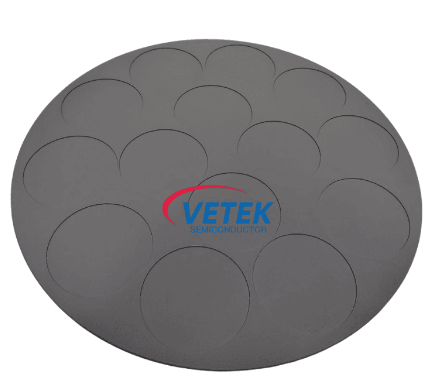
A CVD TaC Coating Cover is not just a protective lid or coated graphite component. In high-temperature semiconductor processes, it can influence chamber cleanliness, thermal stability, part lifetime, and process consistency. For buyers working with SiC crystal growth, epitaxy, MOCVD, LPE, or other demanding thermal-field environments, the real challenge is not simply finding a coated cover. The harder task is choosing a component that can withstand heat, resist corrosion, reduce contamination risk, and maintain dimensional reliability over repeated production cycles.
This article explains how a CVD TaC Coating Cover helps solve common pain points in semiconductor processing, including frequent part replacement, particle contamination, uneven temperature distribution, chemical attack, and unstable production yield. It also outlines what procurement engineers, process engineers, and equipment maintenance teams should evaluate before selecting a supplier such as WuYi TianYao New Material Tech.Co.,Ltd.
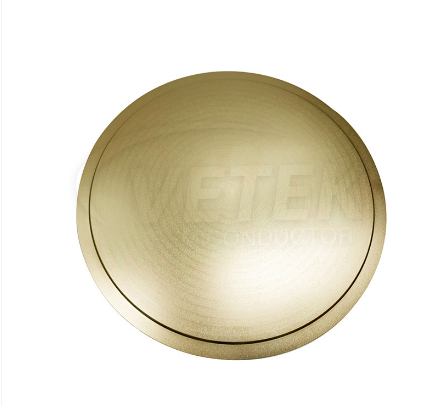
In semiconductor manufacturing, a cover may look like a simple consumable part from the outside. In reality, it often works near intense heat, reactive gases, thermal cycling, and strict cleanliness requirements. When the wrong cover is used, the problem usually does not appear as one dramatic failure. It appears as small process losses that slowly become expensive.
A cover that cannot handle repeated high-temperature exposure may deform, crack, shed particles, or lose surface integrity. When that happens, engineers may see unstable temperature fields, unexpected contamination, shorter maintenance intervals, and inconsistent wafer results. These issues are especially painful in SiC-related processing, where temperatures are high and process windows are narrow.
Buyers often focus on unit price first, but the real cost is usually hidden in downtime. If a cover needs frequent replacement, the production line loses time. If particles enter the chamber, yield may suffer. If thermal distribution becomes unstable, process repeatability becomes harder to control. This is why many teams look beyond conventional graphite surfaces and choose a CVD TaC Coating Cover for critical high-temperature positions.
The core buyer question is simple: does the cover only fit the equipment, or does it help protect the process? A good CVD TaC Coating Cover should do both.
Tantalum carbide is valued in demanding semiconductor environments because it offers strong thermal stability, chemical inertness, and surface durability. When applied through chemical vapor deposition, the coating can form a dense protective layer on a graphite or carbon-based substrate. This helps separate the base material from harsh process conditions.
For a CVD TaC Coating Cover, the coating is not decorative. It is a functional barrier. It helps reduce direct chemical attack on the substrate, improves resistance to corrosive atmospheres, and supports more stable performance under repeated heating and cooling. In high-temperature processing, that combination matters because even small surface degradation can affect chamber cleanliness and part lifetime.
Another important benefit is thermal behavior. During epitaxy, crystal growth, or other thermal-field processes, uneven temperature distribution can create stress, defects, and process variation. A well-designed CVD TaC Coating Cover can contribute to better temperature uniformity by maintaining surface stability and supporting predictable heat transfer. It cannot replace good equipment design, but it can reduce one source of uncertainty inside the hot zone.
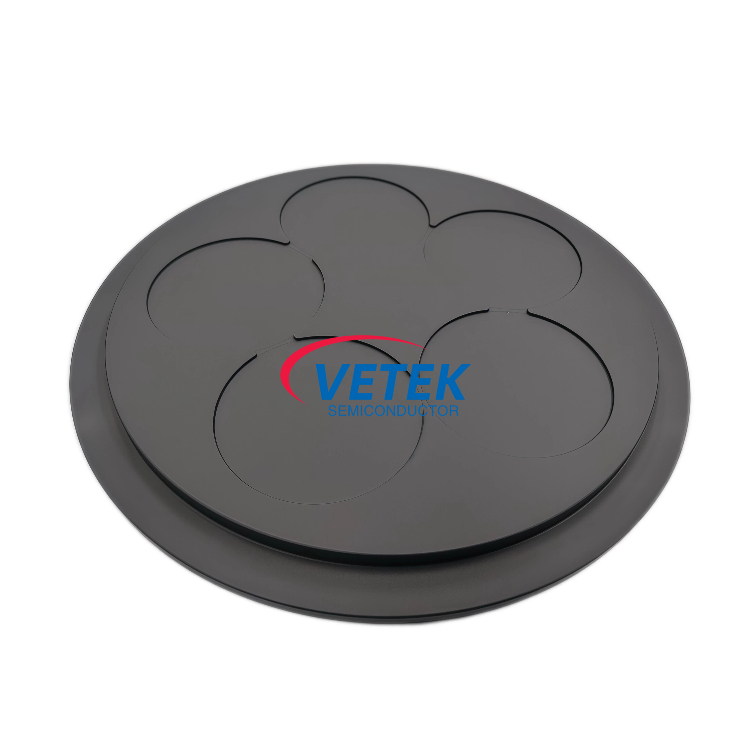
A CVD TaC Coating Cover is commonly considered for semiconductor processes where high temperature, chemical exposure, and part stability are all important. Typical application areas include SiC crystal growth, SiC epitaxy, MOCVD-related thermal environments, LPE systems, and other advanced wafer-processing equipment that requires coated graphite or carbon-based chamber components.
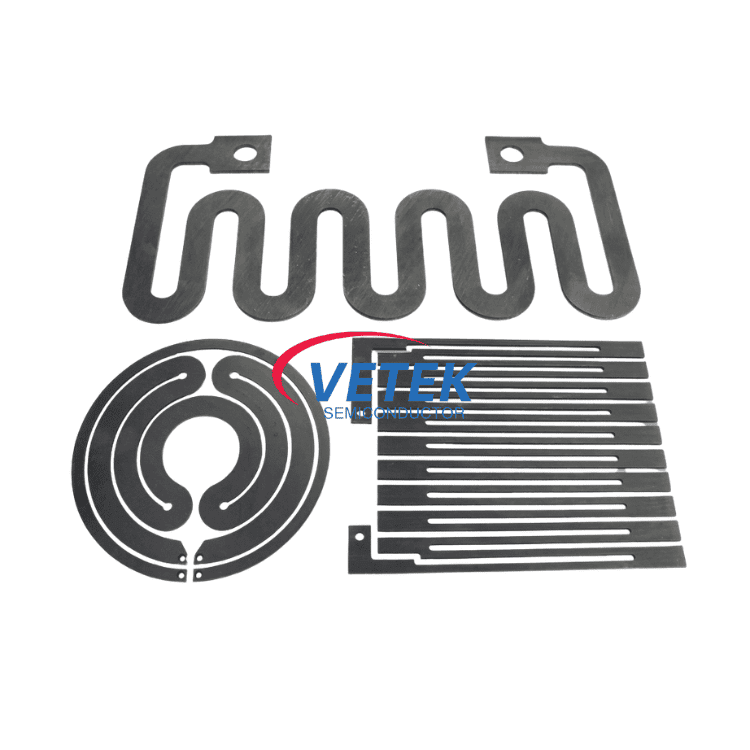
In these environments, the cover may work together with other coated components such as collectors, cover segments, ceilings, susceptors, satellites, rings, and other hot-zone parts. The purpose is not only to cover or shield an area. It may also help manage the process atmosphere, protect the chamber structure, and maintain a cleaner thermal environment around wafers or crystal growth materials.
For companies scaling production, this becomes a procurement issue as much as a technical issue. A small batch may tolerate frequent manual inspection and replacement. A larger production plan cannot. Once output targets rise, every part inside the equipment needs to support repeatability. That is where a reliable CVD TaC Coating Cover becomes valuable to process engineers and purchasing teams alike.
For buyers, the best application match depends on equipment type, gas environment, operating temperature, expected lifetime, part geometry, and cleanliness requirements. A supplier should be able to discuss these conditions before recommending a final structure.
Choosing a CVD TaC Coating Cover should not be reduced to one parameter. High hardness, high thermal stability, or coating thickness alone cannot guarantee performance. A stronger evaluation should include coating quality, substrate compatibility, dimensional control, surface finish, inspection methods, packaging, and supplier communication.
The first factor is coating integrity. A dense and uniform coating helps prevent the substrate from being exposed to corrosive gases or high-temperature attack. If coating thickness is inconsistent, stress concentration may occur during thermal cycling. If adhesion is poor, peeling or particle release may become a serious problem.
The second factor is dimensional accuracy. A cover must fit the equipment properly. If the geometry is not controlled, the part may create assembly difficulty, uneven gaps, or unexpected contact points. In high-temperature equipment, even a small mismatch may become worse after repeated heating cycles.
The third factor is engineering support. Buyers should not have to guess whether a part is suitable. A capable supplier such as WuYi TianYao New Material Tech.Co.,Ltd. should be able to discuss drawing requirements, working environment, coating expectations, inspection standards, and packaging needs. In precision industries, communication quality is often part of product quality.
| Evaluation Item | Why It Matters | Buyer Checkpoint |
|---|---|---|
| Coating material | TaC coating helps resist high temperature and chemical attack in demanding semiconductor environments. | Confirm whether the coating is suitable for the actual gases, temperature range, and process cycle. |
| Coating thickness | Proper thickness supports protection, but excessive or uneven coating may create stress risks. | Ask for typical thickness range and inspection control method. |
| Thermal stability | Stable material behavior helps reduce deformation, cracking, and process drift under heat. | Match the cover to real working temperature, not only theoretical maximum values. |
| Hardness and wear resistance | A harder surface can improve durability during handling and operation. | Review handling requirements and avoid unnecessary mechanical impact. |
| Chemical inertness | Resistance to corrosive atmospheres helps protect the base component and chamber cleanliness. | Share gas chemistry and process atmosphere with the supplier before ordering. |
| Dimensional precision | Correct geometry supports smooth installation and stable equipment operation. | Provide drawings, tolerances, and critical mounting areas clearly. |
| Surface finish | Surface condition may influence particle behavior and cleaning performance. | Clarify surface roughness expectations and cleaning requirements. |
| Supplier experience | Application knowledge reduces trial-and-error costs for buyers. | Choose a supplier that can communicate with engineering teams, not only sales teams. |
Note: Technical values should always be confirmed according to the final drawing, substrate, coating specification, and actual operating environment. Semiconductor processing conditions vary, and a responsible supplier should help review application details before production.
A CVD TaC Coating Cover is a precision component, so supplier selection should focus on more than quotation speed. The supplier should understand how the part will be used, what failure modes the buyer wants to avoid, and which details are critical to process stability.
Buyers can start by checking whether the supplier asks the right questions. For example, does the supplier ask about working temperature, equipment model, process atmosphere, drawing tolerance, cleaning requirements, and expected lifetime? If not, the quotation may be based on a general part description rather than a real engineering fit.
Another useful sign is whether the supplier can support customization. Semiconductor equipment often uses special geometries, and covers may need specific holes, grooves, curved surfaces, or mating areas. A supplier that can work from drawings and provide coating guidance is usually more valuable than one offering only standard sizes.
WuYi TianYao New Material Tech.Co.,Ltd. can be presented as a partner for buyers who need advanced material components for demanding process environments. For procurement teams, the goal is not just to purchase a CVD TaC Coating Cover, but to reduce technical uncertainty before the part enters production.
Even a high-quality CVD TaC Coating Cover needs proper handling. Many part failures are not caused by the coating alone. They may come from impact during installation, incorrect cleaning, thermal shock, forced assembly, or contamination from improper storage.
Before installation, users should inspect the surface carefully under appropriate lighting. Any visible crack, edge damage, peeling mark, or abnormal particle residue should be reviewed before the part enters the equipment. During assembly, operators should avoid direct metal impact or forced fitting. A coated component should never be treated like a rough mechanical part.
Cleaning should also match the coating and process requirements. Aggressive cleaning methods may damage the surface or introduce contamination. If the cover is used in a sensitive semiconductor environment, cleaning procedures should be discussed with the supplier and aligned with the facility’s process control rules.
Practical service life depends on process temperature, atmosphere, cycle frequency, handling, cleaning, and equipment design. A good maintenance plan can help the CVD TaC Coating Cover deliver more stable value over time.
Q1. Is a CVD TaC Coating Cover only used for SiC processing?
Not necessarily. It is often associated with SiC crystal growth and epitaxy because those processes involve high temperatures and demanding atmospheres. However, it may also be considered for other semiconductor or advanced material processes where thermal stability, chemical resistance, and coated graphite protection are required.
Q2. Does thicker TaC coating always mean better performance?
No. Coating thickness must be balanced with adhesion, stress control, geometry, and process conditions. A uniform and well-bonded coating is usually more important than simply choosing the thickest possible layer.
Q3. Can the CVD TaC Coating Cover be customized?
In many cases, yes. Buyers should provide drawings, dimensions, tolerance requirements, and application conditions. Customization may include size, shape, holes, grooves, surface finish, and coating specifications.
Q4. What information should I provide before requesting a quotation?
Useful information includes drawings, substrate preference, working temperature, process atmosphere, equipment type, coating thickness expectations, quantity, inspection requirements, and any known failure issues with previous parts.
Q5. Why is chemical resistance important for this component?
In high-temperature semiconductor environments, gases and reaction byproducts may attack ordinary materials. A chemically resistant surface helps protect the base component and may reduce contamination risks inside the chamber.
Q6. How should I store the cover before installation?
Store it in clean, dry, protected packaging. Avoid impact, friction, dust exposure, and direct contact with hard tools. For precision-coated parts, careful storage is part of quality control.
A CVD TaC Coating Cover is a strategic component for semiconductor teams that need reliable performance in high-temperature and chemically demanding environments. Its value comes from more than material strength. It helps address real production concerns such as part lifetime, process cleanliness, thermal consistency, maintenance planning, and downtime reduction.
For procurement teams, the best choice is not always the lowest-priced cover. The better choice is the one that fits the equipment, survives the process environment, supports stable production, and comes from a supplier able to communicate clearly about technical requirements. When the part is used in SiC epitaxy, MOCVD, LPE, or other advanced thermal-field processes, this level of care becomes even more important.
WuYi TianYao New Material Tech.Co.,Ltd. supports buyers looking for advanced material solutions for demanding semiconductor applications. If your team is evaluating a CVD TaC Coating Cover for new equipment, replacement parts, or process improvement, share your drawings and working conditions with us.
If you are comparing suppliers, solving premature part failure, or looking for a customized CVD TaC Coating Cover, contact us today. Our team can help review your application requirements, discuss suitable coating options, and provide a practical solution for your semiconductor process needs.
+86-579-87223657
Wangda Road, Ziyang Street, Wuyi County, Jinhua City, Zhejiang Province, China