

QR Code

Products
Contact Us


Fax
+86-579-87223657

Email

Address
Wangda Road, Ziyang Street, Wuyi County, Jinhua City, Zhejiang Province, China


|
Industry |
Semiconductor manufacturing (diffusion/oxidation, anneal, etch-chamber quartz rings and viewports, etc.) |
|
Process |
Grade selection and lifetime management of furnace tubes, liners, boats, etch rings/nozzles, viewports and related quartz parts |
|
Solution |
Purity thresholds, crystallization risk and metal-contamination control logic for fused and synthetic quartz |
|
Services |
Grade selection consulting, incoming and process-contamination assessment, boundary vs ceramic solutions |
|
Results |
• When higher purity / synthetic quartz is worth the cost • Crystallization temperature inflection and lifetime signals identifiable • Metal contamination controllable from feedstock to processing • Cross-linkable with ceramic selection and pillar overview |
When selecting semiconductor quartz parts, engineers often struggle not with “whether quartz exists,” but with which purity grade to use, whether crystallization will occur at high temperature, and whether metal impurities will enter from feedstock or processing. This article explains purity thresholds, crystallization risk and contamination-control logic for fused and synthetic quartz, so grade decisions can follow process node and lifetime targets.
Core Conclusion: The core differences are SiO₂ purity and cristobalite content. High-quality fused quartz can reach SiO₂ above 99.5% with cristobalite often held below 0.5%; ordinary grades are about 98.5% SiO₂ with cristobalite up to about 1.5%. Synthetic quartz is typically higher in purity and significantly higher in cost. Whether to upgrade grade depends on node cleanliness, high-temperature duration and acceptable crystallization/contamination risk.
Purity and cristobalite content directly affect thermal expansion, mechanical strength and crystallization tendency at high temperature. Higher impurity levels often catalyze crystallization; alkali metals (Na, K) also lower glass viscosity and accelerate phase change. When specifying, engineers should require verifiable purity and critical-impurity ranges from suppliers—not only a verbal “semiconductor grade” label.
|
Focus |
Higher purity / synthetic path |
Standard fused / ordinary grade |
|
SiO₂ & cristobalite |
Higher SiO₂, tighter cristobalite control |
Wider purity and cristobalite window |
|
Better suited to |
High-cleanliness nodes, long high-T duty, metal-sensitive processes |
Standard diffusion / general structure, cost-sensitive |
|
Main trade-off |
Purchase cost and lead time |
Smaller margin on crystallization and contamination |
Note: Table is a selection-logic summary. Specific SiO₂, cristobalite and metal-impurity limits follow supplier reports and plant specifications.
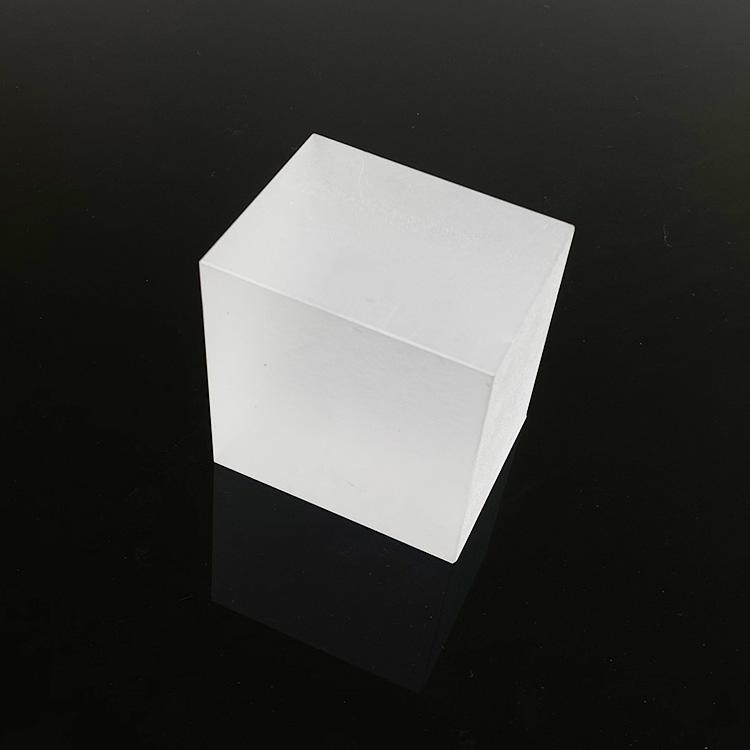
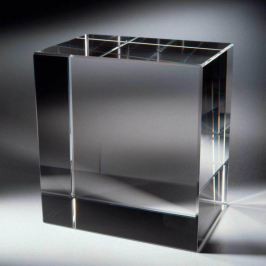
Fused Quartz & Synthetic Fused Silica
Core Conclusion: When fused quartz operates long-term around or above about 1000°C, the amorphous phase can transform toward α-cristobalite with volume change; stress is released as cracks and surface spalling, causing structural failure. Higher impurity levels strengthen crystallization tendency. Many “sudden cracks” are cumulative crystallization—not a single mechanical overload.
Engineers should adopt the idea of a crystallization temperature inflection: the same tube may last long just below the critical region, yet risk rises nonlinearly once process temperature or soak time is pushed up. Surface haze, local devitrification and edge microcracks are often signals to replace early or derate use. Assessment includes checking actual temperature curves and cumulative time, inspecting failed-part morphology, and phase analysis when needed—not only increasing replacement frequency.
• Write maximum temperature and soak duration into quartz-part specifications and replacement rules.
• For impurity-sensitive processes, prefer higher purity grades to reduce catalytic crystallization probability.
• Retain failed parts: distinguish impact cracking from crystallization spalling—thickening the wall does not solve a phase-change problem.
Core Conclusion: Impurity control is not only “buy high-purity material.” Even when feedstock meets spec, improper welding, cutting, grinding and cleaning can introduce secondary contamination. Alkali metals catalyze crystallization; trace metals such as Fe, Al and Ti can cause device-level failure at sensitive nodes. Semiconductor-grade quartz often requires critical metals at very low levels (ppb-class discussions are common), with traceable cleaning and packaging rules.
Typical risk points: feedstock lot variation; surface particles not removed before flame work or welding, then melted into the bulk at high temperature; incomplete acid clean or DI rinse; particles introduced in transfer and packaging. Incoming inspection and supplier audits should cover purity-report methods, critical-impurity lists, post-process cleaning flows and lot-consistency sampling.
1. Process: temperature curve, atmosphere, metal sensitivity, wet/corrosive steps if any.
2. Specification: SiO₂/cristobalite targets, critical metal upper limits, dimensions and surface.
3. Process control: pre/post welding or flame-work cleaning requirements, packaging and unpack rules.
4. Verification: incoming sampling, small-batch tool-down (particle/metal metrics), failed-part reverse analysis for contamination vs crystallization dominance.
Core Conclusion: When replacement intervals suddenly shorten and failed parts show devitrification and microcracks, first check whether the temperature curve was pushed up and whether feedstock/process impurities worsened—not only increase inventory.
Engineering Note:
On a diffusion line, after a process tweak raised peak temperature and extended soak, multiple tubes developed surface haze and edge cracks within months, and replacement volume rose sharply. Handling collision was first suspected, but records showed no change in operation. Failed-part analysis showed local devitrification and microcrack networks consistent with crystallization volume change; the same lot also had alkali metals and some metallic impurities above historical incoming means. Countermeasures were two-track: process side assessed whether peak could be pulled back or high-temperature time shortened; procurement tightened purity and impurity specs and required post-process cleaning records from the supplier. After small-batch switch to a higher purity grade and stabilization of the temperature curve, life returned to an acceptable window. The case shows crystallization is a joint function of temperature and impurities; replacing parts without checking grade and temperature repeats the problem.
1. Must every high-temperature furnace tube use synthetic quartz?
No. It depends on temperature, duration, node cleanliness and cost. Standard diffusion can use quality fused quartz; for metal- and crystallization-sensitive processes, or long duty near the crystallization region, evaluate synthetic or higher-purity paths.
2. Why does cristobalite content matter?
It links to high-temperature phase change and volume-change risk. Content and impurities together drive crystallization tendency; the specification should include measurable, acceptable limits—not appearance alone.
3. If a quartz ring wears fast, should it be switched straight to ceramic?
Plasma sputter wear is a different logic. If failure is dominated by sputter thinning, evaluate ceramic focus rings and similar options; if the mode is crystallization or metal contamination, changing material family does not fix the root cause. See the pillar page role split and C1.
4. Is an incoming purity report enough?
No. Also check report methods, critical metal lists, lot consistency, and whether post-process cleaning and packaging introduce secondary contamination.
5. How does this page work with the pillar and C1?
The pillar gives the overall framework and role split; C1 covers four ceramic families; this page focuses on quartz purity, crystallization and contamination. Use them together.
Selecting semiconductor quartz parts is about matching purity grade, recognizing the crystallization temperature inflection, and closing the loop on metal contamination from feedstock through process cleaning. Fused vs synthetic is not simply cheap vs expensive—it is risk vs cost. On failure, first separate crystallization, contamination and plasma wear, then decide whether to upgrade grade, change the process curve or evaluate a ceramic alternative.
If you need grade assessment for furnace tubes, boats or etch quartz parts, you are welcome to contact the VeTek technical team. Dr. Xiao and the engineering team can assist with specification comparison and application discussion.
Pillar page: Selection Guide for Advanced Ceramic and Quartz Parts in Semiconductor Equipment; ceramic comparison: 0201 How to Select Semiconductor Advanced Ceramics.
Main References and Data Sources
1. Advanced Ceramics and Quartz Blog Cluster Plan (fused/synthetic quartz purity, crystallization and contamination-control architecture).
2. Pillar page Selection Guide for Advanced Ceramic and Quartz Parts and quartz role-split notes.
3. VeTek official website: https://www.veteksemicon.com/other-semiconductor-ceramics
Note: Temperature, purity and impurity descriptions in the text are engineering-framework references; actual values follow grade, incoming reports and plant verification.
Author: VeTek Semiconductor Technical Engineering Team (completed under the guidance of Dr. Xiao)
For further technical discussion or sample evaluation, please contact us via the official website.
+86-579-87223657
Wangda Road, Ziyang Street, Wuyi County, Jinhua City, Zhejiang Province, China